
Industrial Automation
Modern production environments depend on stable control, repeatable switching, and reliable power regulation across heaters, motion systems, process lines, and machine-level automation. In that broader context, Industrial Automation covers the hardware and control infrastructure that helps manufacturers improve uptime, process consistency, and system integration from panel level to plant level.
This category brings together equipment used to monitor, switch, regulate, and coordinate industrial processes. Whether the application involves thermal management, machine control, communication, safety, or plant-floor connectivity, the goal is the same: create a system that is easier to operate, easier to maintain, and better suited to continuous industrial duty.
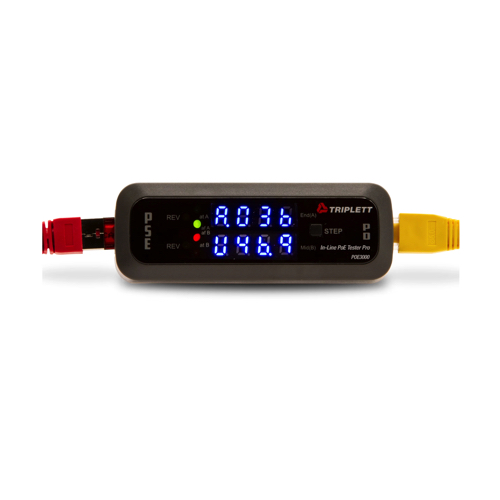
Where industrial automation fits in real applications
Automation hardware is used in a wide range of environments, from standalone machines to integrated production lines. Typical use cases include temperature-dependent manufacturing, electrical load control, conveyor systems, packaging, materials handling, inspection stations, and utility processes where precise switching and coordinated control are important.
In many projects, engineers are not looking for a single device but for a reliable ecosystem of compatible components. That is why industrial automation selection often involves more than one layer of decision-making, including electrical ratings, mounting style, interface requirements, environmental limits, and how each device will interact with the rest of the control cabinet.
Power control and thyristor switching in automation systems
One important part of this category is power control, especially in applications that require regulated electrical energy for heaters and other industrial loads. Thyristor-based devices are often selected where fast switching, repeatability, and long service life are needed in demanding process environments.
Examples in this range include products from Advanced Energy, such as the Thyro-A and Thyro-S families. Models like the Advanced Energy Thyro-A 2A 500-8 HRL3, Thyro-A 3A 400-170 HRL3, and Thyro-A 1A 230-60 H3 illustrate how power controllers can be matched to different voltage and load conditions, while Thyro-S digital thyristor switches support controlled switching in phase-specific configurations.
Examples of devices available in this category
The available product mix reflects the diversity of industrial control tasks. For power regulation, the Advanced Energy Thyro-A+ 1A 230-30 H RLP 4 SCR Power Controller and the Thyro-A+ 2A 500-350 HF RLP 4 show how compact digital-capable controllers can be integrated into panel or chassis-based systems. For higher-capacity or multi-phase needs, devices such as the Thyro-A+ 3A 500-30 H RL 4 and Thyro-A+ 3A 500-650 HF RLP 4 provide additional options for system design.
On the switching side, the Advanced Energy Thyro-S 1S 500-280 HF3, Thyro-S 2S 400-30 H3, Thyro-S 3S 500-30 H3, and Thyro-S 1S 400-350 HFRLP3 are relevant examples for projects that require digital thyristor switching in 1-phase, 2-phase, or 3-phase arrangements. Rather than choosing by model name alone, buyers typically compare operating voltage, phase arrangement, mounting format, and interface access to make sure the device fits the intended cabinet architecture.
How to evaluate industrial automation equipment
When comparing products in this category, it helps to start with the actual process requirement. A heating application may prioritize controlled power delivery and switching behavior, while a machine control project may focus more on signal handling, communication, and interaction with upstream or downstream equipment. Defining the electrical load and control objective first usually prevents over- or under-specifying the hardware.
Key evaluation points often include supply voltage range, phase type, input and output structure, mounting style, interface type, and operating temperature. For example, some listed power controllers and thyristor switches are available in panel-mount or chassis-mount formats and may include USB or micro USB connectivity for configuration or service access. These details matter because they affect commissioning, maintenance access, and enclosure planning.
System compatibility matters as much as device selection
In industrial projects, a component rarely operates in isolation. Power control devices need to work alongside control logic, protective hardware, relays, communication infrastructure, and operator interfaces. That is why category-level sourcing is useful: it helps engineers and buyers evaluate related technologies in one place instead of treating each part as a disconnected purchase.
For broader project planning, it may also be useful to review related areas such as industrial controllers, industrial power equipment, and Ethernet and communication modules. These adjacent product groups often play a direct role in building a complete automation architecture around switching, regulation, and monitoring functions.
Manufacturer landscape within industrial automation
This category includes products associated with recognized industrial and electronic brands. In addition to Advanced Energy for power control examples, buyers may also encounter well-known names such as ABB depending on the application scope and product family being evaluated. Different manufacturers tend to be relevant at different layers of the system, from electrical control and switching to interfaces, sensing, or embedded industrial hardware.
From a procurement perspective, brand filtering can help narrow choices, but the better approach is still application-first selection. In industrial automation, the most suitable device is usually the one that aligns with the process requirement, installation constraints, and maintenance strategy rather than the one with the broadest brand recognition.
Choosing the right category for industrial projects
Because industrial automation spans many subdomains, buyers often arrive with very different needs. Some are replacing an installed thyristor switch in an existing panel, others are specifying a new power control stage for a thermal process, and some are building a larger machine architecture that combines control, communication, HMI, and field-level devices.
This category is designed to support those different entry points by grouping relevant industrial hardware in one place. If your project involves controlled switching, digital power regulation, or integration of cabinet-level automation components, reviewing the available options here can help you compare suitable devices more efficiently and move toward a more coherent system design.
A well-planned automation system is built on the right combination of control, switching, power handling, and connectivity. By focusing on application needs first and then comparing the available industrial hardware accordingly, it becomes much easier to select components that support reliable operation over the long term.
Get exclusive volume discounts, bulk pricing updates, and new product alerts delivered directly to your inbox.
By subscribing, you agree to our Terms of Service and Privacy Policy.
Direct access to our certified experts