Industrial Connectors
Reliable connections sit behind almost every automation task, from bringing sensor signals into a controller to distributing power across machines and linking field devices to networks. In demanding industrial environments, connector selection affects uptime, serviceability, signal integrity, and long-term maintenance just as much as the active electronics around it.
Industrial Connectors cover a broad set of interconnect solutions used in control cabinets, machine wiring, instrumentation, and factory communication systems. Whether the priority is rugged power transmission, compact signal routing, or modular I/O integration, this category helps engineers and buyers compare connection formats that fit real installation conditions.
Where industrial connectors fit in automation systems
In practical terms, these products support the physical interface between equipment layers: sensors, actuators, distributed I/O, controllers, communication hardware, and power distribution points. The right connector architecture can simplify assembly, reduce wiring errors, and make troubleshooting faster during commissioning or maintenance.
This matters in systems that include industrial controllers, remote I/O, and panel devices operating across vibration, temperature variation, electrical noise, and repeated mating cycles. Industrial connector choices are often driven not only by electrical ratings, but also by installation density, shielding needs, locking method, and the expected service life of the connection.
Common connector roles within this category
This category spans more than one connector style because industrial systems rarely rely on a single connection standard. Some applications need compact interfaces for signal-level connections, while others require more robust formats for higher current, environmental sealing, or field termination.
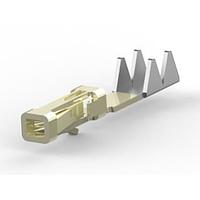
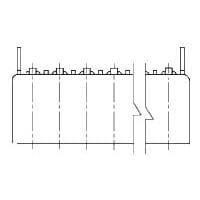
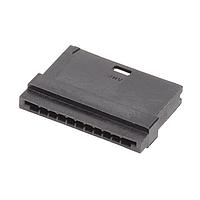
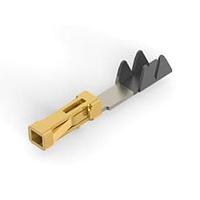
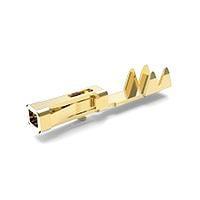
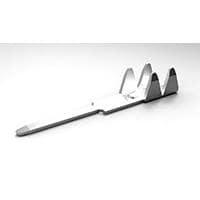
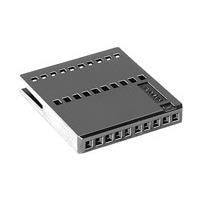
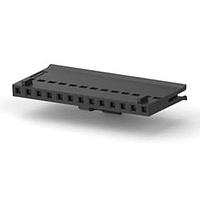
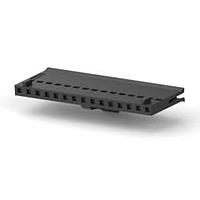
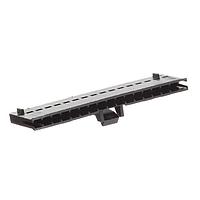
Examples in this ecosystem include I/O connectors for control and signal interfaces, circular metric formats for machine-level cabling, heavy-duty power connectors for higher-load connections, and specialized options for compact cable-to-board or board-to-board implementation. In many installations, multiple connector families are used together to balance space, reliability, and ease of replacement.
How I/O modules relate to industrial connectivity
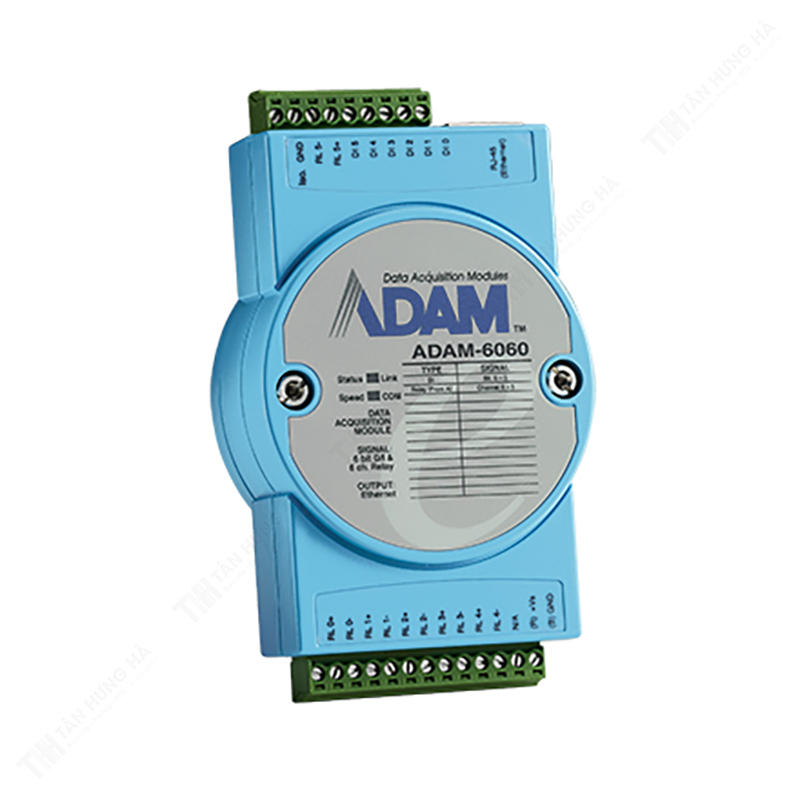
Within this category, I/O modules are an important extension of the connector ecosystem because they bridge field signals and automation networks. Devices such as the Advantech ADAM-6060 and ADAM-6050 combine digital input and output handling with Ethernet communication, allowing field devices to be integrated through practical connection points for distributed control.
For signal conditioning and data acquisition tasks, modules such as the ADAM-4015 for RTD measurement and the ADAM-4024 for analog output illustrate how connectors and interface modules work together. The connector is not just a mechanical accessory here; it is part of the signal path, affecting wiring consistency, maintainability, and overall system organization. If your application centers on distributed signal acquisition, it may also be useful to review the dedicated I/O modules range.
Key factors when choosing industrial connectors
The first step is to define the job of the connection: power, signal, data, or mixed I/O. From there, selection usually follows practical criteria such as current and voltage level, number of contacts, required shielding, cable size, mounting style, and whether the connection must be frequently disconnected for service.
Environmental conditions are equally important. Connectors used on machinery or in process environments may need stronger resistance to vibration, dust, or electrical interference than those used only inside a protected cabinet. In control systems with pulse signals, measurement channels, or encoder feedback, connection quality becomes especially important for stable data transfer and noise control.
- Match the connector type to the electrical function and signal sensitivity.
- Consider termination method and field wiring convenience.
- Check compatibility with panel layout, cable routing, and maintenance access.
- Review insulation and isolation needs where mixed signals or noisy loads are present.
Manufacturer considerations and ecosystem compatibility
When buyers evaluate connector families, brand ecosystem can matter as much as the component itself. A supplier with broad automation coverage can make expansion easier when a project grows from simple panel wiring to networked remote I/O and modular control. In this context, Advantech is relevant not only for interface hardware but also for automation-oriented modules that connect field devices to higher-level systems.
Other manufacturers in this broader landscape, including 3M, Advanced Energy, and Amphenol, may be considered when application requirements point toward specific interconnect formats or installation practices already used in an existing design base. The best fit usually depends on mating reliability, sourcing continuity, and how well the connector line aligns with the rest of the automation architecture.
Industrial applications that depend on the right connector strategy
Connector selection has a direct effect on machine building, process automation, test fixtures, and control panel integration. In a packaging line, for example, connectors may tie sensors and actuators into distributed I/O nodes. In thermal or process monitoring, they may support clean sensor routing into RTD or analog input modules. In serviceable machinery, modular connectors can reduce downtime by making replacement and rewiring more straightforward.
Systems that also incorporate monitoring or motion feedback may be paired with devices such as counters and tachometers, where signal integrity and dependable terminations are especially valuable. Where visual inspection or process imaging is involved, connector reliability also plays a role in the broader infrastructure around cameras and accessories, particularly in installations that require stable power and data routing.
Building for maintenance, expansion, and long-term reliability
A connector choice that works on day one is not always the best choice over the life of the equipment. Maintenance teams benefit from connection systems that are clearly identified, easy to access, and suitable for repeat service without damaging contacts or increasing wiring complexity. For OEMs and panel builders, standardizing connector approaches across multiple machines can also simplify inventory and support.
Long-term reliability often comes from balancing mechanical durability with practical installation needs. In many cases, the most suitable connector is the one that supports orderly cable management, consistent field termination, and straightforward replacement while still meeting the electrical requirements of the application.
Choosing the right category path
This category is most useful when you are narrowing down how devices will physically interface in an industrial system, not just what the system should do electrically. From compact signal connectors to power-capable interfaces and module-level connection hardware, the selection should reflect the realities of the installation environment and the service model of the equipment.
If you are comparing options for machine wiring, panel integration, or distributed automation architecture, a structured view of industrial connectors can help you identify the right balance between robustness, flexibility, and ease of deployment. That usually leads to fewer integration issues and a cleaner path from design to operation.
Get exclusive volume discounts, bulk pricing updates, and new product alerts delivered directly to your inbox.
By subscribing, you agree to our Terms of Service and Privacy Policy.
Direct access to our certified experts