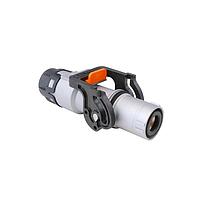
EMobility
As electric vehicle infrastructure expands across factories, commercial buildings, fleet depots, and public sites, buyers often need more than a single charger. They need a practical ecosystem of charging hardware, connector components, protection elements, and service parts that support installation, uptime, and long-term maintenance. That is where EMobility solutions become especially relevant in an industrial and B2B context.
Within this category, the focus is on equipment and accessories used around EV charging systems, from complete charging units to replacement parts and interface-related components. Whether the requirement is for a wall-mounted charger, a socket protection part, a parking accessory for a charging plug, or a repair kit for a connector assembly, the right selection depends on operating environment, connector standard, service strategy, and system integration needs.

Where EMobility products fit in industrial projects
In industrial automation environments, EV charging is rarely treated as an isolated purchase. It is usually part of a wider electrical and control architecture that may also involve power distribution, monitoring, user access, safety devices, and communication functions. This makes category-level understanding important, especially for engineers and procurement teams comparing both chargers and supporting accessories.
Typical use cases include workplace charging, semi-public charging points, service stations, fleet charging areas, and OEM integration. In these applications, EMobility hardware must align with installation layout, charging standard, cable management, environmental exposure, and maintenance expectations. For projects that also require electrical safety coordination, related product groups such as circuit protection can be a useful next step during system planning.
Complete charging units and practical deployment needs
Some buyers come to this category looking for finished charging equipment, while others are sourcing service parts for an installed base. A good example of a complete charging solution is the Weidmuller 2911260000 wallbox, which is positioned for EV charging applications and includes an attached cable with a type 2 plug. For projects where access control or user interaction matters, details such as mobile app support or RFID/NFC functionality can also influence selection.
Another representative option is the PHOENIX CONTACT 1628081 EV charging set, a three-phase solution rated at 22 kW with a 5 m cable and PLC interface. Products in this class are relevant when the priority is deploying a ready-to-integrate charging point rather than building around individual connector parts. If your project also needs logic, sequencing, or supervisory integration, it may be helpful to review industrial controllers used in broader automation architectures.
Why accessories matter just as much as the charger
In real installations, EV charger accessories play a major role in daily usability and serviceability. A charging system may remain electrically functional, but without the correct mounting frame, protective cover, parking element, or repair component, operation becomes less reliable and maintenance becomes more difficult. That is why many B2B buyers source accessories alongside chargers rather than as an afterthought.
Examples from this category show how varied these needs can be. The PHOENIX CONTACT 1624148 EV-T2AC-PARK is a type 2 parking accessory intended to provide a defined resting position for a connector. The PHOENIX CONTACT 1388393 EV-T2SOCR-PA functions as a protective cover for a socket outlet, helping protect exposed connection points when not in use. These may seem like small parts, but they directly affect cleanliness, handling, and mechanical protection in everyday charging operation.
Repair parts, replacement components, and uptime planning
For commercial charging infrastructure, replacement capability is often just as important as initial performance. Sites with frequent use need a clear path for restoring connector condition without replacing an entire assembly. This is where repair kits, spare levers, special bits, and mating-face related parts become relevant.
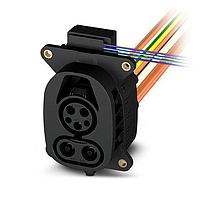
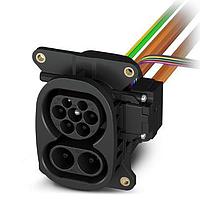
The PHOENIX CONTACT 1085796 repair kit is intended for replacement work on vehicle charging connector mating-face components, while the PHOENIX CONTACT 1085800 and 1085801 items support service work around CCS type 1 HPC DC vehicle connector applications. The HUBER+SUHNER 85183277 spare lever set is another example of how small mechanical parts support maintainability in high-use charging systems. Buyers already standardizing on PHOENIX CONTACT or HUBER+SUHNER components often prioritize this kind of continuity to simplify spare-part management.
How to evaluate the right EMobility product for your application
A practical selection process usually starts with the charging scenario. First, determine whether you need a complete charger, a connector-related accessory, or a service part for installed equipment. Then check the relevant connection standard, such as type 2 or CCS-related compatibility, because accessory fit and repair suitability depend on the exact interface being used.
Environmental and operational factors also matter. Cable length, phase configuration, current level, mounting conditions, and expected user traffic can all change the best-fit option. For example, a fleet or commercial site may prioritize durable handling accessories and easy maintenance access, while a lower-traffic private or workplace setting may focus more on neat cable parking and socket protection. When the charging setup is part of a larger power switching design, adjacent categories such as contactors may also be relevant in panel-level engineering.
Manufacturer landscape within this category
This category includes products associated with established industrial suppliers active in interconnection, charging interfaces, and electrical infrastructure. Among the most visible names here are PHOENIX CONTACT, Weidmuller, and HUBER+SUHNER, each represented by products that address different layers of the EV charging ecosystem, from complete units to protective and service-related parts.
Beyond individual product examples, the broader manufacturer mix also helps buyers align with existing sourcing policies or technical preferences. Depending on project requirements, teams may already be familiar with suppliers such as HARTING, TE Connectivity, Amphenol Industrial, ITT Cannon, Aptiv, or Advantech within industrial programs. Even when the immediate need is only an accessory, supplier compatibility and availability can influence long-term support decisions.
Common buying considerations for B2B sourcing
Technical buyers typically look beyond headline product names and check whether a part contributes to a stable charging operation over time. For chargers, that can mean reviewing power rating, current level, phase arrangement, interface type, and operating temperature range. For accessories, it often means focusing on fit, intended use, replacement workflow, and the role of the part within the connector or socket assembly.
It is also useful to consider service inventory at the time of purchase. Keeping key replacement items such as covers, frames, repair kits, or mechanical spare parts available can reduce downtime and speed up field maintenance. In larger deployments, this approach supports a more structured lifecycle maintenance strategy rather than waiting for wear-related issues to interrupt charger availability.
Choosing with the full system in mind
EMobility procurement is most effective when the charger, accessory set, and service parts are treated as one system rather than separate line items. A complete solution may involve charging hardware for energy delivery, parking and protective accessories for routine use, and repair components for field support. That combination is often what turns a technically suitable charging point into a dependable long-term installation.
For buyers comparing options across industrial and commercial EV charging needs, this category provides a useful starting point for both deployment and maintenance planning. By matching the product type to the charging standard, site conditions, and service expectations, it becomes easier to build an EV infrastructure that is practical to install, operate, and maintain over time.
Get exclusive volume discounts, bulk pricing updates, and new product alerts delivered directly to your inbox.
By subscribing, you agree to our Terms of Service and Privacy Policy.
Direct access to our certified experts