Electrostatic Equipment Repair Service
Unexpected static events can interrupt production, affect measurement accuracy, and create reliability issues in electronics, semiconductor, packaging, and precision assembly environments. When ionizers, electrostatic monitors, chuck power supplies, or related ESD equipment begin to drift, fail intermittently, or stop operating altogether, a structured Electrostatic Equipment Repair Service helps restore stable performance without forcing an immediate replacement decision.
This category is intended for organizations that rely on electrostatic control as part of daily operations. It covers repair support for commonly used equipment in ESD-safe workstations, process tools, and industrial lines, with service options relevant to both routine failures and more specialized electrostatic devices.
Where electrostatic equipment repair becomes critical
Electrostatic control devices are often treated as background infrastructure until performance problems begin to show up in the process. In practice, issues such as unstable ion balance, reduced discharge capability, inconsistent monitoring, or power delivery faults can lead to product handling risks, process instability, and troubleshooting delays across the line.
Repair is especially relevant for facilities working with sensitive electronic assemblies, wafer handling systems, clean production areas, or any application where ESD control is part of quality assurance. In these environments, restoring existing equipment can be a practical way to maintain continuity while preserving compatibility with installed systems and operating procedures.
Equipment types typically covered in this category
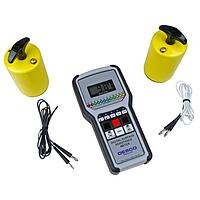
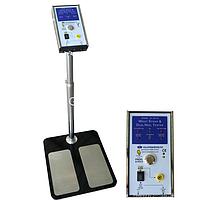
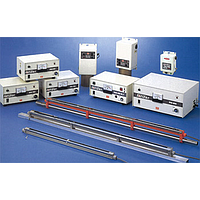
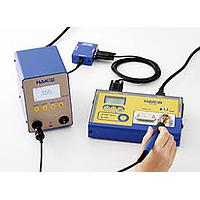
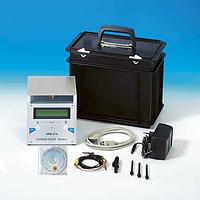
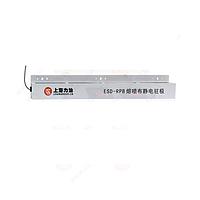
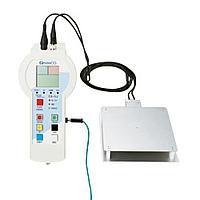
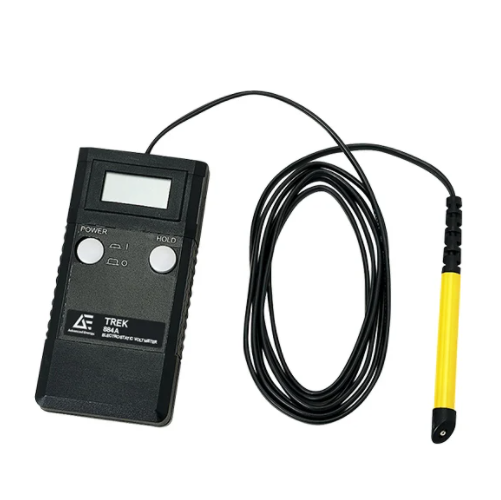
This category centers on repair needs across the electrostatic equipment ecosystem rather than a single device type. That includes static eliminators and ionizers, electrostatic discharge or charge monitoring equipment, electrostatic chuck supplies, and related electrostatic measuring instruments used to verify performance or monitor charging behavior.
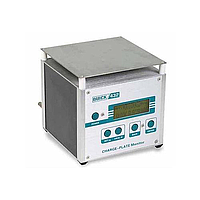
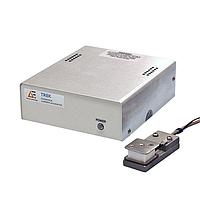
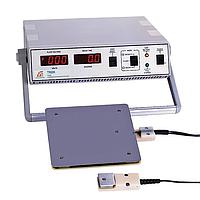
Examples in this range include services for the KESD Static Eliminator (Ionizer) Repair Service, TREK Static Eliminator (Ionizer) Repair Service, SIMCO Static Eliminator (Ionizer) Repair Service, and Vessel Static Eliminator (Ionizer) Repair Service. For higher-voltage process applications, repair support may also apply to units such as the TREK Electrostatic Chuck Supply Repair Service and SIMCO Electrostatic Chuck Supply Repair Service, while monitoring-focused needs may align with the TREK Electrostatic Discharge/Charger Monitors Repair Service or the Advanced Energy Electrostatic Discharge/Charger Monitors Repair Service.
Common failure symptoms and service considerations
Electrostatic equipment can fail in ways that are obvious or subtle. Some units stop powering on entirely, while others continue operating but no longer provide the expected control performance. In ionizers, this may appear as poor neutralization or unstable operation. In monitor systems, it may show up as unreliable readings, alarm behavior, or communication issues. In chuck supply systems, output instability or protection faults may interrupt process operation.
Because electrostatic devices often interact with sensitive products and other test or production assets, repair work should consider both the immediate fault and the equipment’s role in the wider system. In cases where electrostatic equipment interfaces with broader electrical instrumentation, related support areas such as electrical and electronic meter repair may also be relevant.
Support for major electrostatic equipment brands
Brand familiarity matters in repair because electrostatic equipment is often integrated into established factory standards. This category includes service examples associated with manufacturers such as TREK, SIMCO, Vessel, KASUGA, HAKKO, KESD, and Advanced Energy. Using a brand-aware repair pathway can help when evaluating known failure patterns, installation context, or compatibility expectations within the customer’s existing setup.
That does not mean every repair case is identical between brands or between product families from the same manufacturer. A static eliminator, a charger monitor, and an electrostatic chuck power-related unit serve very different functions, so fault isolation and repair priorities naturally differ. The goal is to return the equipment to dependable operation while respecting the actual application it supports.
How electrostatic repair fits into a broader maintenance strategy
Many facilities manage electrostatic equipment alongside oscilloscopes, power supplies, meters, and thermal diagnostics tools. For that reason, electrostatic service is often part of a broader maintenance workflow rather than an isolated activity. If the issue appears connected to upstream power behavior, support from a DC/AC power supply repair service may be useful in parallel.
Likewise, troubleshooting may require waveform or signal verification during diagnosis, particularly in more complex systems or test environments. In those cases, related service categories such as oscilloscope and logic analyzer repair can support a more complete maintenance approach. This is especially relevant when electrostatic behavior must be analyzed in relation to timing, control, or triggering conditions.
Choosing the right repair path for your application
The most effective repair request starts with a clear description of the equipment role in the process. It helps to identify whether the unit is being used for ionization, charge monitoring, electrostatic measurement, or chuck supply operation, and whether the problem is constant, intermittent, or only visible under production load. These details can make diagnosis more efficient and reduce the risk of treating symptoms rather than the root cause.
It is also useful to consider the operating environment. Electrostatic equipment used in clean processes, electronics production, or specialized process tools may face different stresses than devices used at benchtop ESD control stations. When brand-specific context is important, customers working with Advanced Energy or other listed manufacturers can also review the relevant manufacturer pages for a clearer view of available equipment support.
Typical reasons companies repair instead of replace
Replacement is not always the fastest or most economical path, especially when installed equipment is already matched to process requirements, mounting arrangements, operator procedures, or qualification documents. Repair can be a sensible option when the asset remains appropriate for the application and the issue is concentrated in power, control, sensing, or output-related sections.
For B2B users, repair also helps reduce disruption in lines where electrostatic protection is tied directly to yield and reliability. Restoring an existing unit may simplify reinstallation, minimize retraining, and preserve consistency across multiple workstations or tools that use the same electrostatic control platform.
Practical next step for electrostatic equipment service needs
If your facility depends on ionizers, electrostatic monitors, chuck supplies, or related ESD control hardware, a focused repair service can help extend equipment life and bring critical functions back into operation. This category is designed to support those needs across representative product types and recognized manufacturers without reducing the decision to a one-size-fits-all recommendation.
Review the available service items in this category to match the equipment type and brand as closely as possible. A more accurate selection at the start usually leads to smoother handling, clearer diagnosis, and a repair process that better fits the technical demands of your application.
Get exclusive volume discounts, bulk pricing updates, and new product alerts delivered directly to your inbox.
By subscribing, you agree to our Terms of Service and Privacy Policy.
Direct access to our certified experts