Heat welding mold
Reliable grounding connections matter most where failure is not acceptable. In lightning protection and earthing systems, the connection point is often the difference between a long-lasting installation and a weak link that degrades over time. That is why heat welding mold solutions are widely used for creating permanent electrical bonds between conductors, bus bars, and grounding components.
On this category page, you can explore molds and related connection formats used in exothermic or thermal welding applications. These products are typically selected for grounding networks, lightning protection systems, substation earthing, telecom infrastructure, industrial plants, and other projects that require low-resistance, durable connections in demanding environments.
Where heat welding molds are used
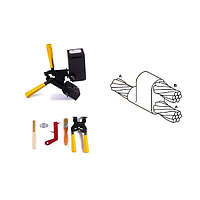
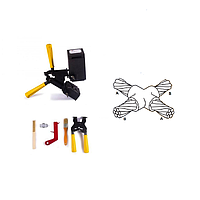
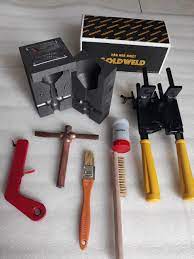
A heat welding mold is designed to shape the weld cavity so that molten welding material forms a consistent connection between conductors. In grounding and lightning protection work, this method is commonly used to join cable to ground rod, bus bar to bus bar, and other conductor combinations that must remain electrically stable over time.
Compared with temporary or mechanically tightened joints, a properly matched mold supports a more permanent bond suitable for exposed outdoor environments, buried grounding grids, and industrial installations. It is especially relevant where corrosion resistance, current-carrying continuity, and installation repeatability are important selection criteria.
Typical connection types in this category
This category includes mold formats intended for different conductor geometries and installation tasks. Some items are built for cable-to-ground-rod connections, while others are designed for bus bar-to-bus bar joints. Choosing the correct mold depends on the conductor form, dimensions, and the connection layout required in the field.
For example, models such as the Goldweld CR13-C-1295, Goldweld CR7-D-2295, and Goldweld CR14-E-1250 are intended for connecting cable to ground rod and include handle clamp assemblies. For bus bar applications, products such as Goldweld RR4-D-231231, Goldweld RR4-C-172172, and Goldweld RR3-E-127127 illustrate how mold variants are matched to specific conductor sizes and connection arrangements rather than treated as interchangeable parts.
How to choose the right mold for a grounding project
The first step is to identify the connection configuration. A mold for cable-to-rod work will differ from one used to join flat conductors or bus bars. Installers should also confirm the conductor size, because mold cavities are made for defined dimensions. Even within one connection family, there may be several versions for different bar or conductor sizes.
The second step is to review the practical installation setup, including clamp compatibility and the amount of welding material required for the joint. In the sample range shown here, some bus bar models are associated with different handle clamp types such as HCC or HCD, and the welding material quantity also varies by connection size. These details directly affect field handling, process consistency, and final joint quality.
It is also helpful to consider the wider installation ecosystem. A mold is only one part of the connection process; matching it with the appropriate thermal welding agent and compatible conductors is essential for predictable results.
Representative products from Goldweld
This selection includes products from Goldweld, a manufacturer featured in this category. The range shows how different molds are tailored to specific field applications rather than grouped as generic accessories. That is useful for engineers and buyers who need to shortlist parts according to actual connection points in an earthing network.
For bus bar-to-bus bar joints, examples such as Goldweld RR4-C-127127, Goldweld RR4-C-142142, Goldweld RR3-E-142142, and Goldweld RR3-E-172172 reflect size-based selection logic. For support and verification work, the Goldweld GT001 Resistance box may also be relevant as part of a broader maintenance or test workflow around grounding system performance.
Why mold selection affects long-term system reliability
In lightning protection and grounding systems, poor connections can increase resistance, create weak mechanical points, and complicate maintenance over the life of the installation. A correctly selected welding mold helps produce a repeatable joint shape and supports better consistency between design intent and field execution.
This matters not only in new projects but also in upgrades and expansions of existing grounding grids. When the connection method is aligned with conductor type and site conditions, the finished joint is better suited to long service intervals, outdoor exposure, and electrically critical applications. That is one reason molded exothermic connections are widely specified in infrastructure and industrial environments.
Related products often selected together
Heat welding molds are typically specified alongside other grounding and lightning protection components. Depending on the project scope, buyers may also need grounding rods for the earthing system or lightning rod equipment for the air termination side of the installation.
In soil conditions where grounding performance must be improved, additional materials such as earth resistance reduction compound may also be considered. Looking at the full system rather than a single connection component usually leads to more reliable project planning and purchasing decisions.
What to review before placing an order
Before ordering, verify the conductor type, actual dimensions, intended joint orientation, and required accessories for installation. This is especially important for molds used in grounding work, because similar model families may differ by conductor size or clamp arrangement even when the application description appears close.
If you are sourcing for a project, it is worth checking whether the requirement is for cable-to-rod, bus bar-to-bus bar, or another connection style, and whether the matching welding consumable has already been specified. A clear parts list helps avoid site delays and reduces the risk of selecting a mold that does not match the real conductor geometry.
Conclusion
A well-matched heat welding mold supports dependable electrical bonding in grounding and lightning protection systems. By selecting according to connection type, conductor size, and installation method, buyers can narrow the range quickly and focus on parts that fit the actual project requirement.
Explore the products in this category to compare available mold options for cable, rod, and bus bar connections. For broader system planning, it also makes sense to review related consumables and grounding components so the full installation works together as intended.
Get exclusive volume discounts, bulk pricing updates, and new product alerts delivered directly to your inbox.
By subscribing, you agree to our Terms of Service and Privacy Policy.
Direct access to our certified experts