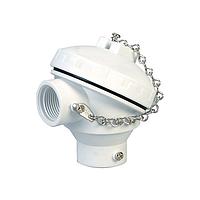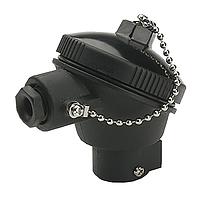
Protection Heads
In industrial temperature measurement, reliability often depends on more than the sensor itself. The enclosure and connection hardware around the sensing assembly play a major role in protecting wiring, simplifying installation, and keeping thermocouple or RTD terminations organized in demanding process environments. That is where Protection Heads become important.
Why protection heads matter in temperature measurement assemblies
A protection head is typically used as the termination point for a temperature sensor assembly. It helps shield internal electrical connections from dust, handling, and general plant conditions while also providing a practical housing for cable entry and sensor termination. In many setups, it forms part of a broader mechanical assembly together with a tube or well mounted into the process.
For engineers and maintenance teams, the value is straightforward: a properly selected head supports cleaner installation, easier inspection, and more dependable sensor wiring over time. In applications where the measuring point is exposed to heat, vibration, or routine washdown and maintenance activity, the head contributes to the durability of the complete assembly rather than acting as a simple accessory.
How protection heads fit into the overall sensor assembly
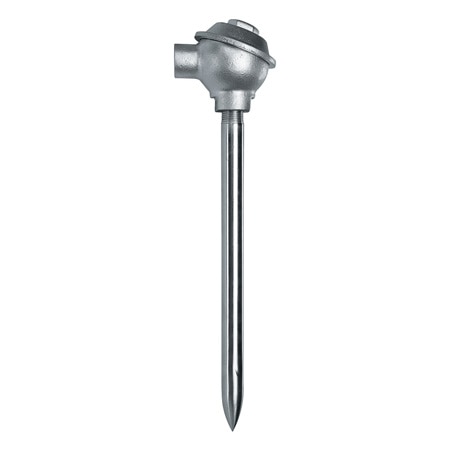
In a typical industrial temperature measurement point, the sensing element is inserted into a protective structure and then terminated at the top in a head assembly. Depending on the process design, this may be combined with protection tubes or with thermowells, both of which help isolate the sensor from direct process exposure.
This arrangement is especially common where sensor replacement, mechanical protection, or safer maintenance access is required. The head provides the upper interface for wiring and assembly management, while the lower component handles process-facing protection. Looking at the full installation as a system is usually the best way to choose compatible parts and avoid fit or service issues later.
Typical selection factors for protection heads
Choosing the right protection head usually starts with the mechanical layout of the sensing point. Connection type, mounting arrangement, and available installation space all affect what will fit the process and the sensor assembly already in use. For replacement projects, matching the existing hardware format is often just as important as electrical compatibility.
Another key factor is the surrounding environment. Areas with elevated ambient temperatures, dirt, moisture, or frequent maintenance activity may call for a more robust head arrangement. Buyers should also consider cable routing, ease of terminal access, and whether the assembly needs to integrate with specific process connection sizes used elsewhere in the installation.
Material and assembly considerations
When reviewing head assemblies, it helps to consider the full mechanical chain rather than the head in isolation. Material choice in related components can influence the overall suitability of the measurement point for heat, corrosion exposure, and general service life. In this category ecosystem, users often pair heads with metal protective components selected for the process conditions.
For example, OMEGA offers metal protection tube options in both 304 stainless steel and black steel formats, with common process connection styles such as male NPT and lengths including 12 in, 18 in, and 24 in. These examples illustrate how the head is typically part of a modular assembly approach, where tube material, connection size, and installation depth are chosen alongside the upper termination hardware.
Examples of related components used with protection heads
Several representative products in this range show how protection heads are commonly deployed with companion hardware. Models such as the OMEGA 1/2-PTSS-12, 1/2-PTSS-18, and 1/2-PTSS-24 are metal protection tubes built in 304 stainless steel for applications that may require higher temperature capability. For similar layouts in black steel, options such as the OMEGA 1/2-PTBS-12 and 1/2-PTBS-24 illustrate an alternative mechanical choice within the same assembly concept.
Larger connection formats are also available in the same family, including OMEGA 3/4-PTSS-12, 3/4-PTSS-18, and 3/4-PTSS-24, as well as black steel versions like the 3/4-PTBS-12 and 3/4-PTBS-24. Rather than treating these as standalone end products, it is more useful to view them as supporting components that work with the head, the sensing element, and the process connection to create a complete temperature measurement installation.
When to compare protection heads with other enclosure options
If the requirement is primarily termination and wiring protection above the sensor assembly, a protection head is often the appropriate place to start. It is particularly relevant when the application calls for a compact, serviceable enclosure at the top of a temperature sensor installation. In many industrial plants, this type of hardware is chosen to bring structure and protection to field wiring connections.
However, if the main concern is shielding the sensor from the process itself, the more relevant comparison may be with protection head configurations used together with lower protective components, or with dedicated tube-based assemblies. Evaluating the installation from the process connection up to the terminal enclosure usually leads to a more accurate product choice.
Practical buying guidance for B2B users
For OEMs, panel builders, maintenance teams, and process engineers, the most efficient purchasing approach is to confirm compatibility across the whole assembly. That includes the sensor type, insertion length, process connection standard, tube or well dimensions, and the enclosure style needed for wiring termination. A mismatch in any one of these areas can create avoidable delays during installation or replacement.
It is also useful to think ahead about maintenance access and spare part strategy. Standardizing on a defined family of heads and related protection components can simplify servicing across multiple measurement points. Where assemblies must be replaced quickly during shutdown windows, consistent connection types and mechanical formats make sourcing and field work more manageable.
Find the right protection head for your application
This category is best understood as part of a broader temperature measurement assembly, not as an isolated hardware item. The right protection head helps organize sensor termination, supports field durability, and works together with the mechanical protection below it to create a more serviceable installation.
If you are selecting components for a new build or replacing an existing assembly, focus on the complete application context: process connection, surrounding environment, compatible protective hardware, and maintenance requirements. That approach makes it easier to choose a protection head solution that fits the installation and supports reliable long-term operation.
Get exclusive volume discounts, bulk pricing updates, and new product alerts delivered directly to your inbox.
By subscribing, you agree to our Terms of Service and Privacy Policy.
Direct access to our certified experts