Semiconductor Equipment
Modern semiconductor work depends on more than a single instrument or production step. From device characterization and wafer-level evaluation to packaging, inspection, and component handling, teams need an ecosystem of tools that supports accuracy, repeatability, and efficient development. This category brings together Semiconductor Equipment used across research, validation, manufacturing support, and test environments.
Whether the goal is low-current measurement, high-voltage sourcing, parametric testing, or broader semiconductor process support, selecting the right equipment starts with understanding the application, measurement range, and integration needs. The products and brands in this category are relevant to engineers, labs, integrators, and industrial buyers who need dependable instruments for semiconductor workflows.
Where semiconductor equipment fits in the workflow
Semiconductor environments typically combine multiple stages of activity: electrical characterization, process verification, inspection, packaging support, and final validation. Equipment in this category is therefore not limited to one job. It may be used during early R&D, pilot production, incoming quality control, failure analysis, or automated test development.
A major part of this ecosystem is source/measure instrumentation, especially in applications where engineers must source voltage or current while measuring the device response with high sensitivity. That is why users looking through this category often compare complete systems, modular platforms, and precision source meter solutions side by side before narrowing down to a specific test setup.
Key equipment types commonly used in semiconductor applications
One of the most important groups in this category is the SMU, or source measure unit. An SMU combines power sourcing and precision measurement in one instrument, making it suitable for IV characterization, leakage testing, material research, sensor validation, and component analysis. For semiconductor work, this is especially useful when very small currents, guarded measurements, or Kelvin connections are needed.
Examples in this category include benchtop and modular solutions from KEITHLEY, KEYSIGHT, TTI, and GW INSTEK. Benchtop models are often selected for standalone laboratory work, while modular SMU platforms are a better fit for higher channel density, synchronized testing, or integration into broader test racks and automated systems.
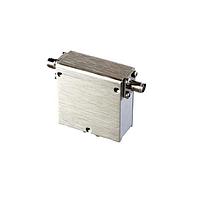
In addition to primary measurement instruments, some semiconductor applications also benefit from supporting accessories such as low-noise filters. These are not the main test engine by themselves, but they can improve measurement conditions in sensitive setups where noise performance directly affects low-level results.
Representative products in this category
For engineers who need broad source and measure capability in a classic bench instrument format, the KEITHLEY 2460 SourceMeter SMU Instrument and KEITHLEY 2470 SourceMeter SMU Instrument are representative examples. They illustrate two common requirements in semiconductor testing: higher current capability for more demanding source conditions, and higher voltage capability for applications that need extended compliance or wider measurement range.
For modular and multi-channel environments, the KEYSIGHT PZ series provides a different approach. Products such as the KEYSIGHT PZ2131A and PZ2130A emphasize multi-channel precision measurement, while the PZ2121A, PZ2120A, and PZ2110A show how channel count, pulse behavior, sampling rate, current sensitivity, and voltage range can be balanced depending on the device under test and the intended throughput.
On the compact SMU side, TTI SMU4201, TTI SMU4001, and the GW INSTEK GSM-20H10 are useful examples of precision source meter options for engineers who need straightforward DC sourcing and measurement for evaluation, education, and general electronic characterization tasks. For noise-sensitive measurement chains, accessories such as the KEYSIGHT N1298B Ultra Low Noise Filter and N1298C Low Noise Filter can play an important supporting role in improving signal conditions.
How to choose semiconductor equipment more effectively
The first step is to define the actual measurement objective. Semiconductor applications vary widely: some require low-current leakage analysis, others need pulse sourcing, high-voltage characterization, or multiple channels for parallel device evaluation. A good selection process starts with the electrical range you need to source and the resolution you need to measure, rather than choosing only by brand or headline specification.
Next, look at the test architecture. A benchtop instrument may be enough for manual characterization or low-volume engineering work. In contrast, a modular platform can make more sense if the project involves automation, synchronized channels, denser rack systems, or expansion over time. Features such as 4-wire remote sense, guard connections, digitizer capability, and sampling speed become more important as the complexity of the test scenario increases.
It is also worth considering the noise environment, fixture design, and the expected DUT behavior. Some semiconductor devices are highly sensitive to source noise, settling behavior, or current measurement floor. In these cases, the total setup matters just as much as the instrument itself, including cabling, filtering, and shielding practices.
Brand landscape and selection context
This category includes established manufacturers that are widely used in semiconductor and precision electronic test environments. TTI and GW INSTEK are often considered for practical source meter needs in labs and industrial settings, while KEITHLEY and KEYSIGHT are frequently evaluated for deeper precision measurement, characterization flexibility, and modular test integration.
Other listed manufacturers such as TEKTRONIX, YOKOGAWA, Stanford Research Systems, ESDEMC, ZEAL, and Scientific Test provide broader context for buyers working across multiple semiconductor and electronic test tasks. Depending on the workflow, procurement teams may compare instrument families not only by performance, but also by system compatibility, operator familiarity, and long-term maintenance considerations.
Typical applications across R&D and production support
In research and engineering labs, semiconductor equipment is often used for device evaluation, IV sweeps, material investigation, and verification of component behavior under controlled source conditions. These tasks benefit from stable output, precise measurement, and repeatable test methods, especially when working with low-current devices or wide dynamic ranges.
In production-related environments, the same category supports incoming inspection, fixture-based testing, packaging-related electrical checks, and failure analysis workflows. Multi-channel modules can be valuable where throughput and repeatability matter, while standalone source meters remain useful for troubleshooting, process verification, and engineering confirmation outside fully automated lines.
Because semiconductor processes span many disciplines, buyers often need equipment that can support both immediate projects and future changes in test demand. That is why flexibility in range, connectivity, and measurement mode is often as important as raw accuracy.
Building a practical semiconductor test setup
A reliable setup usually combines the instrument, appropriate interconnects, and a test method aligned with the DUT. For sensitive measurements, Kelvin connections help reduce lead resistance effects, while guarding and shielding can improve low-current stability. If the application includes pulsed operation, transient response and timing behavior should be reviewed carefully before final selection.
Accessories should also be evaluated in context. A filter such as the KEYSIGHT N1298B or N1298C is most useful when the application genuinely benefits from reduced noise or bandwidth conditioning. In other words, the best result often comes from matching the complete measurement chain to the test objective, not from focusing on a single component in isolation.
Final considerations
Choosing semiconductor equipment is ultimately a matter of fit: fit to the DUT, fit to the test method, and fit to the working environment. This category is designed to support that process by bringing together instruments and related solutions used in semiconductor characterization, validation, and production support.
If you are comparing source measure units, modular precision platforms, or supporting accessories for low-noise testing, start with the required voltage, current, sensitivity, channel count, and integration level. A clear view of those factors will make it much easier to identify the right semiconductor equipment for both present tasks and future expansion.
Get exclusive volume discounts, bulk pricing updates, and new product alerts delivered directly to your inbox.
By subscribing, you agree to our Terms of Service and Privacy Policy.
Direct access to our certified experts