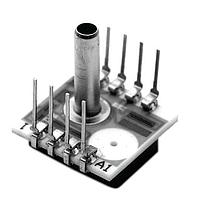
Pressure, Flow and Level Measurement
Reliable process data starts with the ability to monitor what is happening inside pipes, tanks, manifolds, and production lines in real time. In industrial plants, laboratories, utility systems, and OEM equipment, accurate measurement of pressure, flow, and level helps operators maintain product quality, improve process stability, and detect abnormal conditions before they become costly failures.
Pressure, Flow and Level Measurement covers a broad instrumentation ecosystem used to track media movement, line conditions, and storage status across many applications. This category brings together devices suited to both compact machine-level integration and larger process installations, from board-mount pressure sensing to high-capacity Coriolis flow measurement for demanding industrial environments.
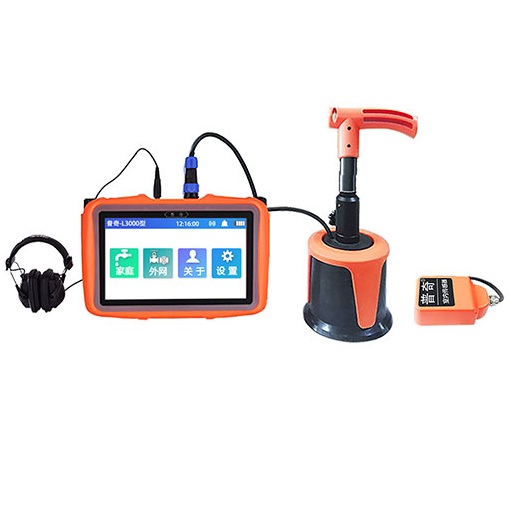
Why these measurements matter in industrial systems
Pressure, flow, and level are closely related variables in most fluid handling processes. A pressure signal can indicate line resistance, pump performance, or filter condition. Flow measurement helps verify dosing, batching, transfer, and consumption. Level monitoring supports inventory control, overflow prevention, and continuous process operation.
When these measurements are selected correctly, they support better control logic, more stable automation, and clearer diagnostics. In practice, engineers often consider them together rather than as isolated instrument groups, especially in systems involving liquids, gases, hygienic processes, chemical handling, or utility distribution.
Typical device types found in this category
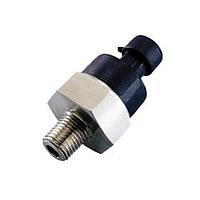
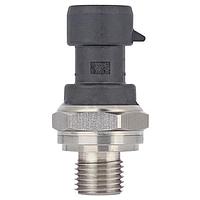
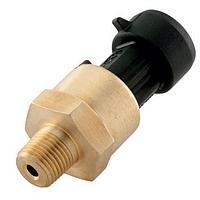
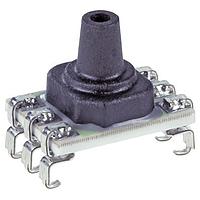
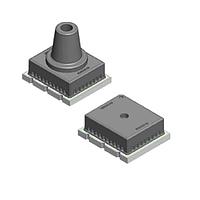
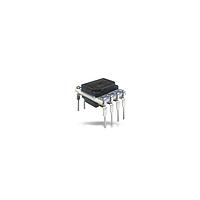
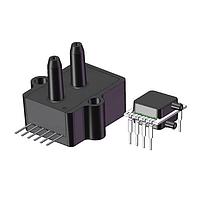
This category includes instruments for both direct measurement and system integration. On the pressure side, compact pressure sensors and transducers are commonly used in embedded systems, pneumatic circuits, HVAC-related equipment, and machine control. Examples from Amphenol include models such as the DLC-L01G-U2, ELVH-B001D-HNND-C-NAA4, DLC-L10D-D4, and MLV-015DE1BSN, which illustrate the variety available for different installation and signal requirements.
For flow applications, the range extends from compact sensing components to advanced inline process meters. A product such as the 3M 7100035846 flow sensor represents the smaller end of the spectrum, while the Anton Paar L-Cor series shows how flow instrumentation can scale into highly accurate mass flow and density measurement for industrial processes.
Understanding Coriolis flow meters in the product mix
One of the most technically important groups in this category is the Coriolis mass flow meter. This measurement principle is widely used when direct mass flow measurement, density information, and strong repeatability are required. Unlike volumetric methods that depend more heavily on process compensation, Coriolis technology is often selected for applications where product consistency and traceability are important.
Representative products in this category include the Anton Paar L-Cor 4000, L-Cor 8000, L-Cor 8100, L-Cor 8200, and L-Cor 8300. Together, these models cover a very wide operating span, from low-flow duties up to large industrial throughput. Depending on the model, users may also benefit from process communication options such as Modbus RTU, Profibus PA, and Fieldbus, making integration into PLC, DCS, or plant monitoring architectures more straightforward.
For hygienic applications, the Anton Paar L-Cor 6000 Hygienic Flow Meter is especially relevant. Its process connection and hygienic-oriented design make it suitable for environments where cleanability, controlled product contact surfaces, and compliance-oriented process design are key considerations.
Pressure sensing for equipment, OEM, and control applications
Not every measurement task requires a large inline process instrument. In many machines and packaged systems, compact pressure components are the practical choice. These devices are often used to monitor differential pressure, confirm airflow or liquid pressure conditions, and provide feedback for control boards or electronic subsystems.
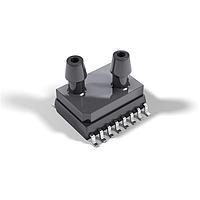
The Amphenol 30 INCH-D-MV, for example, reflects the type of differential pressure sensor often used in board-mount designs. With temperature compensation and Wheatstone bridge output characteristics, this kind of sensor is relevant where engineers need an electronic pressure signal for custom circuitry, embedded control, or compact measurement assemblies. For buyers comparing component-level options, it can also be useful to review broader sensor portfolios from manufacturers such as Bosch Sensortec when evaluating integration strategies.
How to choose the right instrument
Selection should begin with the actual process requirement rather than the product name alone. For flow instruments, engineers typically look at medium type, expected operating range, required accuracy, line size, process temperature, pressure conditions, and communication needs. Coriolis meters may be a strong fit where mass flow and density are both important, while compact flow sensors may suit equipment-level monitoring or simpler control tasks.
For pressure devices, the key factors usually include pressure type, measurement range, media compatibility, output format, mounting style, and whether the application needs gauge, absolute, or differential sensing. Level-related selection often depends on vessel geometry, media behavior, switching versus continuous measurement, and installation constraints. Across all three groups, it is important to match the instrument not only to nominal operating conditions but also to startup, shutdown, cleaning, and abnormal process states.
Integration and communication considerations
Modern instrumentation is expected to do more than provide a raw reading. In industrial automation, measurement devices are often part of a larger control and diagnostics framework. Output options such as analog signals, pulse outputs, and digital communication can significantly affect how easily a device fits into an existing architecture.
Several Anton Paar L-Cor models listed in this category support common industrial interfaces, which can help simplify deployment in control cabinets, integrated transmitter configurations, or remotely mounted arrangements. For users building broader machine or process systems, related component ecosystems from brands such as Autonics may also be relevant when considering signal handling, controllers, and automation integration around the measurement layer.
Applications across industries
The products in this category are relevant to a wide range of sectors. Process plants use them for transfer lines, batching, utility monitoring, and density-sensitive production steps. OEMs use compact pressure sensors in analytical devices, pneumatic controls, and embedded electronics. Hygienic operations may require flow instruments designed for clean process connections and controlled wetted materials.
They are also important in water-related systems, chemical handling, food and beverage processes, laboratory skids, and general industrial automation. Even when the end use differs, the purchasing logic is similar: stable measurement, suitable environmental performance, integration compatibility, and a device format that matches the installation.
Building a more reliable measurement strategy
A good measurement setup supports more than compliance or display purposes. It helps operators identify drift, maintain repeatable production, and make better decisions based on real process conditions. Choosing from a category that includes both compact sensors and advanced process instruments makes it easier to align device capability with application complexity.
Whether you are specifying a board-level pressure transducer, reviewing a compact flow sensor, or comparing high-performance mass flow measurement options such as the Anton Paar L-Cor series, the right choice depends on process context, integration needs, and required measurement confidence. This category is designed to support that evaluation with practical options across pressure, flow, and level measurement tasks.
Get exclusive volume discounts, bulk pricing updates, and new product alerts delivered directly to your inbox.
By subscribing, you agree to our Terms of Service and Privacy Policy.
Direct access to our certified experts