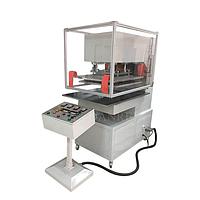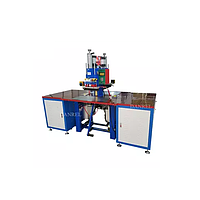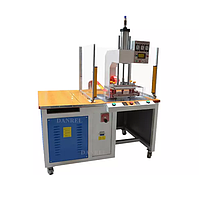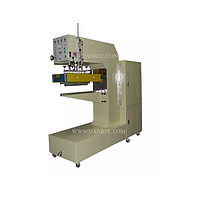
High Frequency Welding Machine
When a production process depends on clean, repeatable seals on flexible plastics, the welding method has a direct impact on product quality, speed, and scrap rate. For manufacturers working with PVC, PU, and similar materials, a High Frequency Welding Machine is often chosen for applications where strong seams, neat edges, and stable cycle times are required.
This category brings together equipment used for dielectric welding in industrial settings, from compact machines for smaller workpieces to higher-output systems for larger weld areas and continuous production tasks. It is especially relevant for users producing tarpaulins, tents, inflatable products, banners, medical bags, waterproof covers, and other products that rely on consistent thermoplastic bonding.
How high frequency welding supports industrial plastic joining
High frequency welding, also called RF welding in many industrial environments, generates heat inside the material rather than only from the surface. When suitable thermoplastic sheets are placed between electrodes and exposed to a high-frequency electromagnetic field, the material heats internally and softens at the joint area. With pressure applied, the layers bond into a uniform seam.
This principle makes the process well suited to applications where appearance, sealing performance, and mechanical strength all matter. Compared with some external-heating methods, internal heating can help reduce uneven melting, surface scorching, and inconsistent seam formation when the material is compatible with dielectric welding.
Materials and applications commonly associated with this category
In practical manufacturing, these machines are widely used for materials with suitable dielectric properties. PVC, PU, and TPU are commonly associated with high-frequency welding because they respond well to the electromagnetic field and can form durable welded joints. By contrast, some plastics are much less suitable, so material testing or supplier consultation is important before selecting equipment.
Typical end products include tarpaulins, rainwear, inflatable structures, canopies, outdoor advertising materials, water bladders, field tents, conveyor-related flexible components, and similar plastic assemblies. For large-format or continuous sealing work, process support equipment such as industrial water chillers may also be relevant in a broader production setup, depending on machine configuration and operating conditions.
Representative machine types in this range
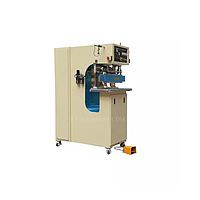
The models in this category show that high-frequency welding is not limited to one machine format. Compact general-purpose units such as the Danrel DR-4KW, DR-5KW, and DR-8KW are suitable reference points for standard welding tasks where moderate power, adjustable weld time, and foot-operated control are useful in day-to-day production.
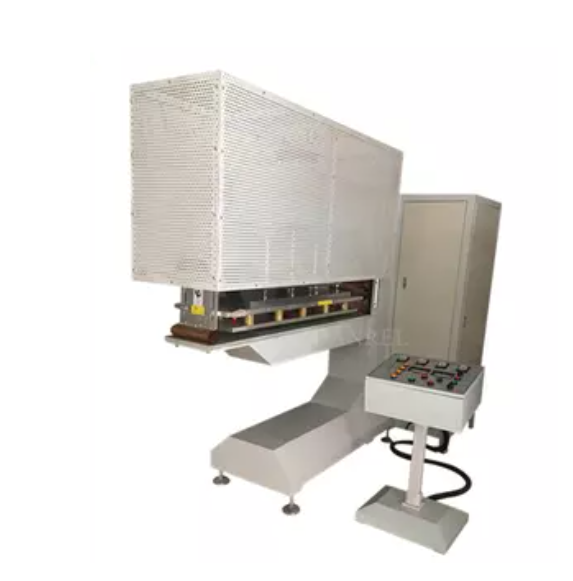
For larger output requirements, machines such as the Danrel DR-T15-G and DR-T25-G illustrate a heavier-duty approach with higher power levels and broader welding capability. At the upper end of the listed range, the Danrel DR-B25 High Frequency Welding Machine demonstrates how this technology is applied when larger electrodes, higher output, and more substantial machine construction are needed for demanding industrial jobs.
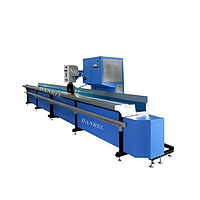
There are also more specialized examples in the category. The Danrel DR-HC08 uses a curved electrode configuration that fits certain shaped or continuous welding tasks, while the Danrel DR-T15-A Automatic Walking High Frequency Welding Machine for PVC Tents, Water Bladder reflects the needs of long-seam production where work length and process continuity are important.
What to consider when selecting a high frequency welding machine
Choosing the right machine starts with the material type and the geometry of the weld. Not every thermoplastic behaves the same way under dielectric heating, and the required seam width, part size, and product shape will strongly influence whether a compact press-style machine or a larger automatic system is more appropriate.
The next factor is output and productivity. A lower-power model may be sufficient for smaller weld areas or thinner materials, while larger products or higher throughput can justify moving to 15KW, 25KW, or specialized formats. Electrode size, stroke, pressure capability, and operating mode also affect real production performance, especially where repeatability matters across long runs.
Utilities should not be overlooked. Many models in this category operate on AC 380V or equivalent three-phase supply, and stable electrical input is important for process consistency. In facilities where pneumatic actuation is used, the quality of the air supply can also influence machine response and repeatability, so related systems such as compressed air treatment equipment may be part of the wider installation.
Why stable process conditions matter
A good weld depends on more than rated power alone. Input voltage stability, pressure control, weld time, and electrode condition all contribute to seam quality. If the power supply fluctuates too much, the machine may not deliver consistent electromagnetic energy, which can result in weak bonding, uneven seam appearance, or interruptions from protection circuits.
This is one reason many buyers evaluate not only the machine specification but also the overall operating environment. In real production, a properly matched power supply, appropriate air system, and routine maintenance practice can make a significant difference in achieving repeatable weld quality over time.
Danrel as a key manufacturer in this category
Danrel is the primary featured manufacturer in this category, with models covering a broad working range from compact 4KW and 5KW units to higher-capacity 15KW and 25KW equipment, as well as application-oriented designs. That breadth is useful for buyers who need to compare machine scale, operating style, and output level within one brand ecosystem.
The listed Danrel range also shows how machine selection is often tied to production format rather than power alone. Some users need a bench-style or press-style machine for discrete welds, while others require extended working length, shaped electrodes, or automatic travel for long seams on tent fabric or water bladder products.
Related equipment in a broader packaging and production workflow
Although this category focuses on welding equipment, many production lines combine several machine groups to complete the final product. After sealing or forming plastic components, some manufacturers also use downstream systems such as heat shrinking machines for packaging or finishing steps, depending on the end application.
Looking at the process as a whole can help buyers avoid selecting a machine in isolation. Throughput targets, material handling, cooling needs, and final packaging all influence the most practical equipment choice for a manufacturing cell or full production line.
Short FAQ
Which materials are commonly suitable for high frequency welding?
PVC, PU, and TPU are commonly associated with this process because they can respond well to dielectric heating. Material compatibility should still be confirmed before purchase or production rollout.
Is higher power always better?
Not necessarily. A higher-power machine can support larger weld areas or heavier production demand, but the correct choice depends on material, seam size, cycle time, and product design.
Why is voltage stability important?
Stable electrical input helps the machine maintain consistent output and welding performance. Unstable voltage can reduce seam quality and affect process repeatability.
For buyers comparing industrial plastic joining solutions, this category is best approached by matching the machine to the material, seam geometry, and production volume rather than focusing on power alone. A suitable welding system, combined with stable utilities and the right operating format, will usually deliver better long-term results than simply choosing the largest machine available.
Get exclusive volume discounts, bulk pricing updates, and new product alerts delivered directly to your inbox.
By subscribing, you agree to our Terms of Service and Privacy Policy.
Direct access to our certified experts