Different frequencies exist, with some models suitable for large plastic parts, while others are more commonly used for electronics, medical devices, or delicate and small materials. Although they all operate using ultrasonic waves, the way they work with materials varies significantly across different groups of machines.
While many models may appear similar based on power ratings, the differences in frequency become more apparent in specific applications, particularly in weld stability and the ability to process different materials.
What exactly is ultrasonic frequency in welding machines?
Simply put, frequency is the number of oscillations the vibrating head produces in one second, usually measured in kHz. In ultrasonic welding, common frequencies today are around 15kHz, 20kHz, 30kHz, or 40kHz.
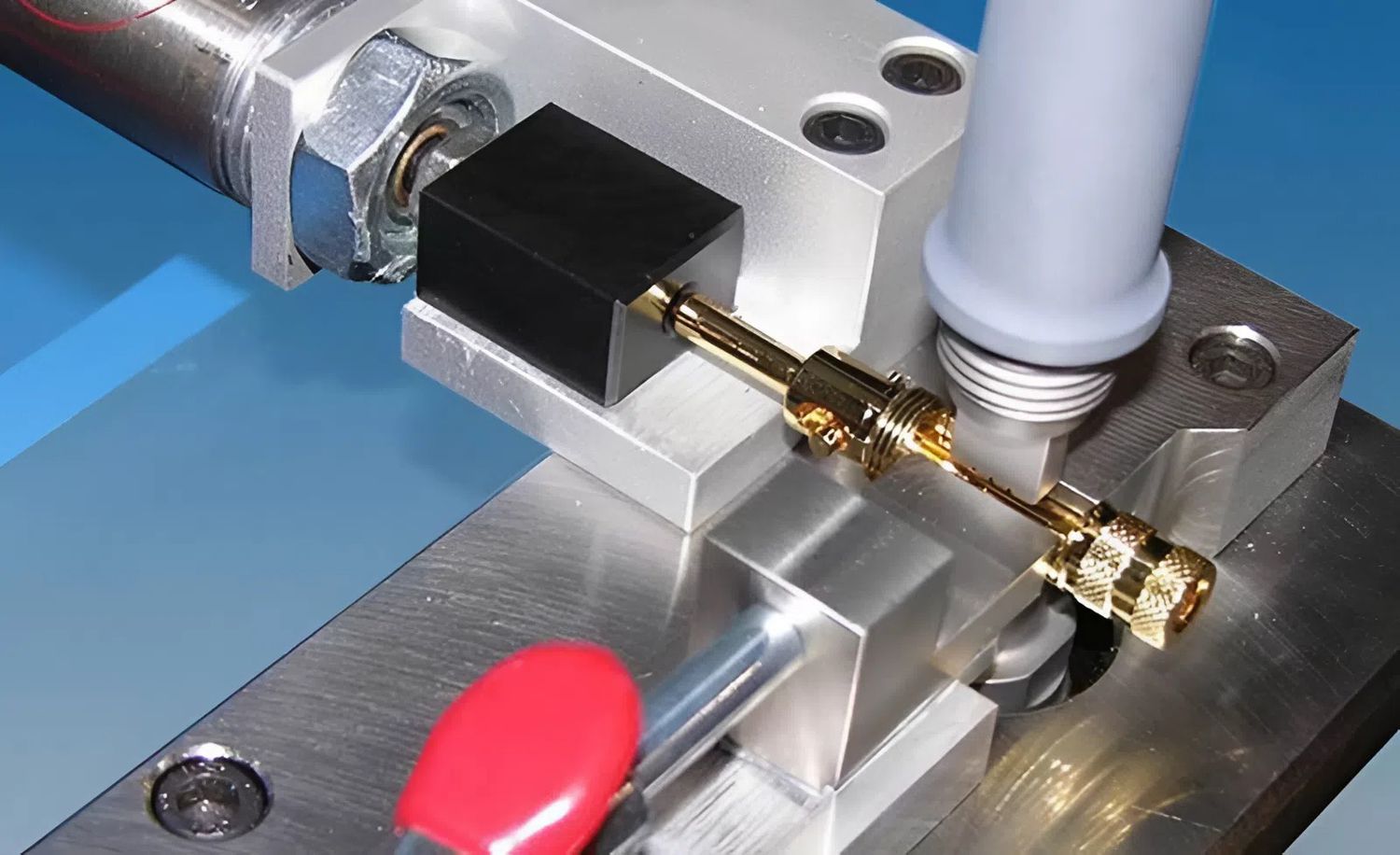
When the machine is operating, electrical energy is converted into high-frequency mechanical vibrations and transmitted to the welding head. These vibrations create localized friction at the contact area between the materials, causing the surfaces to heat up very quickly and begin to bond together.
The key point is that simply changing the frequency alters the vibration characteristics of the entire welding process. The level of oscillation, the heat generated, and the force applied to the material surface are all affected to varying degrees.
Therefore, even with the same ultrasonic welding machine, the operating feel and the types of products suitable for each model often differ significantly.
Why does frequency have such a significant impact on weld quality?
During welding, vibrational energy is not transmitted to the material in a fixed manner. Some vibrations are stronger and deeper, while others prioritize stability and surface control.
Low frequencies are generally associated with larger vibration amplitudes, creating a more pronounced impact force on the material. Conversely, high frequencies tend to produce smaller and smoother vibrations, suitable for parts requiring high precision.
If the chosen frequency is not suitable for the material or product size, the weld may sometimes exhibit problems such as:
- Insufficiently strong bond
- Surface heats up too quickly
- Thin parts are easily deformed
- Uneven welds between products
- Small cracks appear in the contact area after machining
These defects don't always appear immediately. In some cases, the product may be finished normally, but weaknesses in the joint area only become apparent after a period of use.
Therefore, many companies, when choosing a machine, pay close attention to the material, product size, and machining type before deciding on the appropriate frequency.
Low frequencies are generally suitable for larger details and thicker materials
15kHz or 20kHz welding machines typically generate stronger vibrations, making them quite common for larger products or those requiring a significant welding force. This type of welding is frequently seen in the plastics industry, automotive components, or parts with large contact surfaces.
As the vibrations penetrate deeper, the material heats up faster at the contact area. This results in a stronger bond that forms quickly without needing to maintain the temperature for too long.
Some common applications of this group include:
- Industrial plastic casings
- Automotive components
- Wires and cables
- Thick parts
- Products requiring strong pressing force
However, the large vibration amplitude also makes handling small parts more difficult to control. If used for thin materials or small components, the surface may sometimes be subjected to more force than necessary.
High frequencies are commonly found in electronics and small components
With 30kHz or 40kHz frequencies, the vibrations produced are significantly smaller and more stable. When applied to materials, the effect is smoother and less disruptive to the surrounding area of the solder joint.
This type of vibration is quite suitable for:
- Electronic components
- Sensors
- Medical devices
- Thin plastics
The details are small in size
In products requiring high aesthetics or precision, high frequencies often result in a cleaner and more uniform surface after welding. Low vibration also helps to minimize misalignment of parts during processing.
However, when applied to very thick materials or requiring strong welding force, high-frequency welding may sometimes fail to create the same clear bond as lower frequencies.
A higher frequency doesn't necessarily mean a better machine
Many people, when first learning about welding, often think that the higher the frequency, the more modern the machine or the better the welding quality. In reality, each frequency level is suitable for a different type of product, rather than simply being classified as strong or weak.
Large components require strong vibrations to transmit energy deeply enough. Conversely, small components need stable vibrations to avoid damaging the surface or structure of the product.
Therefore, instead of looking at it from the perspective of "higher is better," many companies will prioritize considering:
- Thick or thin material
- Large or small parts
- Need for strong welding force or high precision
- Machining speed
- Desired stability during continuous operation
Even a small change in product design can significantly alter the appropriate frequency range.
Besides frequency, what other factors affect the weld quality?
Frequency has a significant impact, but it's not the only factor determining weld quality. The welding head, vibration amplitude, pressure, and material properties also directly affect the final result.
In many cases, even machines with high power can produce unstable welds simply because the vibration transmission method isn't perfectly suited to the type of product being processed.
The welding head design is also a crucial consideration. If the welding head isn't synchronized with the operating frequency, energy can be dispersed or transmitted unevenly, resulting in a less stable weld joint during continuous operation.
This is why many current welding machines are developed for specific application groups instead of using a single configuration for all types of products.
Choosing the correct frequency usually makes the machining process much more stable
A good weld isn't just about two materials sticking together. Many factories are more concerned with maintaining stability across the thousands of products being manufactured continuously each day.
When the frequency is appropriate for the material and product being processed, vibrations are generally more stable, heat is generated more evenly, and the material surface is less subjected to excessive stress. As a result, the failure rate is significantly reduced during long-term operation.
Therefore, when comparing different ultrasonic welding machines, many companies not only look at power but also spend considerable time evaluating the frequency level suitable for the type of product they are producing.