Equipment Repair Services
When measurement, test, or inspection equipment starts showing unstable readings, power issues, display faults, or communication errors, repair is often the most practical next step before full replacement. For many industrial, laboratory, construction, and maintenance teams, a reliable service workflow helps extend equipment life, reduce downtime, and keep instruments usable within everyday operations.
Equipment Repair Services on this page are focused on supporting a wide range of professional instruments and technical devices. The scope covers common field tools as well as more specialized electronic and precision equipment used in maintenance, testing, quality control, and industrial troubleshooting.
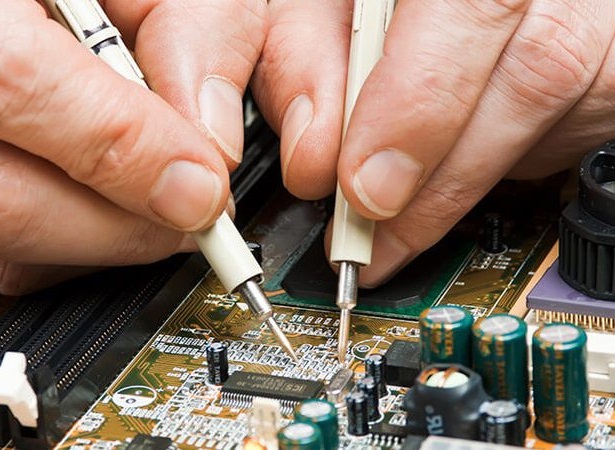
Repair support for professional measurement and test equipment
Industrial instruments are expected to perform consistently, but real operating environments can be demanding. Repeated transport, dust, vibration, battery leakage, damaged ports, worn buttons, optical misalignment, and aging internal components can all affect accuracy and usability over time.
This category brings together repair support for many equipment groups, from handheld meters to more advanced electronic test systems. If you are also reviewing broader service options for your installed base, you can explore equipment calibration services for accuracy verification and adjustment after repair where appropriate.
Typical equipment types covered in this service category
The range of serviceable instruments in this category is broad because technical organizations rarely operate only one type of device. Repair needs may involve electrical testers, environmental instruments, gas detection devices, laboratory equipment, optical tools, telecom testers, particle counters, thermal devices, power-related instruments, and other specialized meters.
Distance measuring instruments are a good example of equipment that often requires careful diagnosis. Units from LEICA, BOSCH, MAKITA, NIKON, and STANLEY are widely used in construction, installation, and site survey tasks, where impact damage, charging problems, laser output issues, and keypad faults may interrupt field work. Representative service entries in this category include LEICA Distance Meter Repair Service, BOSCH Distance Meter Repair Service, MAKITA Distance Meter Repair Service, NIKON Distance Meter Repair Service, and STANLEY Distance Meter Repair Service.
Examples of repair needs across different instrument groups
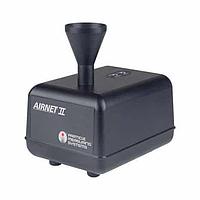
Not all failures look the same, even when symptoms appear similar. A clamp meter with unstable readings may have input circuit damage, sensor drift, display issues, or a mechanical clamp problem. A particle counter may power on normally but still produce unreliable results because of contamination, flow instability, or sensor-related faults. This is why fault diagnosis is a critical part of any professional repair process.
Within this category, examples of supported service types include FLUKE Clamp Meter Repair Service, KEYSIGHT Clamp Meter Repair Service, FLUKE Phase Indicator Repair Service, Fluke Particle Counter Repair Service, KEYSIGHT Picoammeter/Nanovoltmeter Repair Service, and Rohde & Schwarz EMC Precompliance Set Repair Service. These examples show that the category is relevant not only to general handheld tools but also to more demanding electronic measurement applications.
What businesses usually expect from a repair workflow
For B2B users, a repair request is not only about fixing a fault. It is also about restoring equipment to a usable condition with a process that is clear enough for maintenance planning. Typical expectations include initial inspection, symptom review, fault isolation, replacement or restoration of failed parts where feasible, functional verification, and practical recommendations for continued use.
In many cases, repair decisions are connected to asset management. A company may choose repair when the instrument remains operationally important, replacement lead time is long, or the device is part of a larger procedure that depends on known handling practices and accessories. Where condition assessment is important before making that decision, an equipment inspection service can help clarify whether repair, calibration, or replacement is the better path.
How to choose the right repair service for your equipment
A practical selection process starts with the equipment type, brand, and observed symptom. Instruments used for electrical measurement, optical measurement, environmental monitoring, EMC work, or precision low-level measurement each have different failure patterns and service requirements. Providing accurate information at the start helps shorten the evaluation process and improves the chance of an efficient repair outcome.
It is helpful to prepare details such as manufacturer, model name, fault description, operating condition, accessories included, and whether the issue is intermittent or constant. Brands commonly represented in this category include FLUKE, KEYSIGHT, Rohde & Schwarz, LEICA, BOSCH, MAKITA, NIKON, and STANLEY. If your organization works heavily with portable electrical instruments, related service needs may also overlap with the broader electrical measurement field.
Repair, calibration, inspection, or replacement?
These options are related, but they are not interchangeable. Repair addresses a fault or performance problem that prevents normal operation. Calibration checks and, when applicable, adjusts measurement performance against a reference. Inspection focuses on condition, functionality, and serviceability. Replacement may be more suitable when damage is extensive or when repair is no longer economical.
For many instruments, repair and calibration are best considered together. After an electronic or mechanical fault is corrected, the instrument may still need verification to confirm that the output is acceptable for field or lab use. In situations where continuity of work matters more than immediate ownership, some users also consider an equipment rental service while their unit is under evaluation or repair.
Common use cases for service requests
Organizations typically look for repair support when important instruments fail unexpectedly during routine work. This may happen on construction sites using laser distance meters, in maintenance teams using clamp meters and phase indicators, in laboratories using picoammeters and nanovoltmeters, or in cleanroom and environmental monitoring work involving particle counters and dust-related instruments.
Another common case is gradual performance decline rather than complete failure. Buttons may become unresponsive, connectors loosen, displays dim, charging circuits weaken, or measurement behavior becomes inconsistent over time. In these situations, timely service can help preserve the value of existing equipment and reduce disruption to established workflows.
Supporting longer equipment life with a practical service approach
Repair services are most useful when they are treated as part of a broader maintenance strategy rather than as a last-minute reaction. Clear fault reporting, proper handling during transport, and timely inspection after abnormal behavior can all improve service outcomes and reduce repeat issues. This matters especially for instruments that are used frequently in field conditions or in production-critical environments.
Whether you need support for a handheld distance meter, an electrical test instrument, a particle counter, or a more specialized measurement system, this category is designed to help you identify relevant repair options more efficiently. Reviewing the available services by equipment type and brand is a practical way to move from symptoms to the right next step.
Get exclusive volume discounts, bulk pricing updates, and new product alerts delivered directly to your inbox.
By subscribing, you agree to our Terms of Service and Privacy Policy.
Direct access to our certified experts