Oscilloscopes (NI)
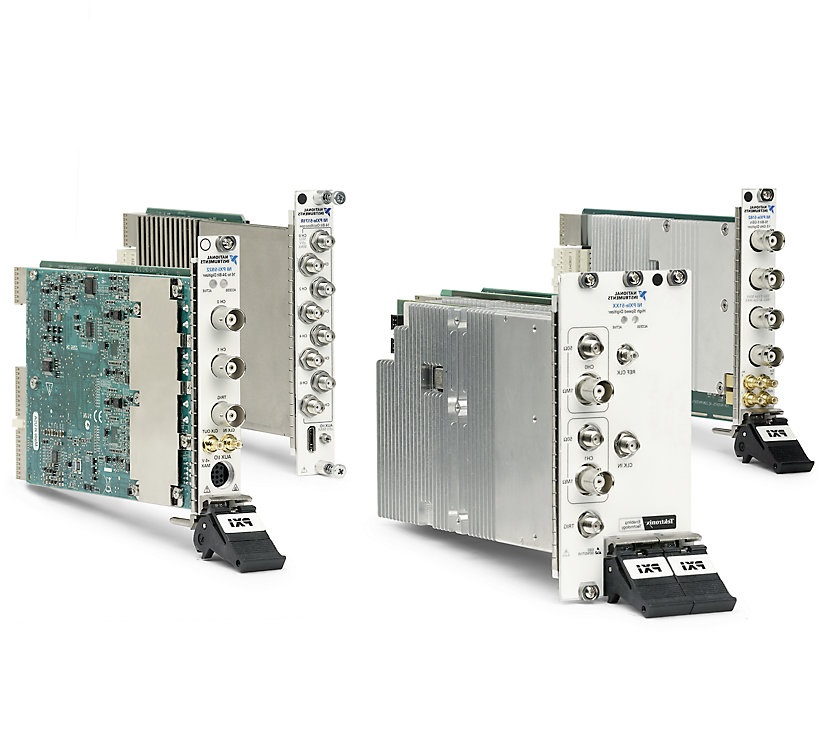
Capturing fast electrical events is only useful when the measurement chain is matched to the signal under test. In many development, validation, and automated test environments, engineers are not simply looking for a standalone instrument—they need an oscilloscope workflow that includes the right bandwidth, sampling performance, and probing method for the task. This is where NI oscilloscopes fit naturally into modern electronic test systems.
Within this category, you can explore NI-based oscilloscope measurement solutions and supporting probe options used for waveform observation, signal integrity work, transient analysis, and high-speed verification. The range is relevant for lab benches as well as integrated test platforms, especially when measurement accuracy depends on selecting the appropriate probe type and front-end performance.
Why NI oscilloscope solutions are used in test and validation
Oscilloscopes are central to debugging analog and mixed-signal behavior, checking timing relationships, and observing waveform anomalies that are difficult to identify with slower or less specialized tools. In an NI environment, they are often part of a broader electronic test architecture that may also include switching, control, and data acquisition.
For teams building flexible measurement setups, NI equipment is attractive because it can support both general-purpose waveform inspection and more advanced automated workflows. If your application also involves signal routing or test sequence expansion, related platforms such as NI switching hardware can complement oscilloscope-based measurements in larger validation systems.
Probe selection matters as much as bandwidth
One of the most common causes of poor oscilloscope results is a mismatch between the signal and the probe. Bandwidth alone does not guarantee a reliable waveform view. Engineers also need to consider attenuation, loading effects, input voltage range, and whether a passive probe, active probe, or differential probe is more appropriate.
For general-purpose voltage measurements, passive single-ended probes remain a practical choice. Examples in this category include the NI SP500X and NI SP200B, both aimed at routine oscilloscope tasks but suited to different signal conditions. A model such as the NI SP500C, with higher attenuation, can be relevant when working with larger amplitudes where probe scaling and safe signal handling become more important.
Comparing passive, active, and differential probe approaches
Passive probes are commonly selected for everyday debugging because they are simple to use and cover many standard bench measurements. Products such as the NI CP400X, NI CP500X, and NI SP500X illustrate the role of passive probes in observing typical voltage waveforms while balancing usability and measurement reach.
Active probes are often preferred when signal bandwidth increases and circuit loading must be minimized. In this category, the NI SA1000X, NI SA1500X, and NI SA2500X represent options for higher-frequency signal analysis, where preserving waveform fidelity is critical. For measurements across two points that should be observed as a difference rather than with respect to ground, a differential active probe such as the NI-5191 is a more suitable approach.
This distinction is important in applications involving fast digital edges, power electronics control signals, sensitive analog nodes, or floating measurements. Choosing the correct probe style helps reduce distortion, improve confidence in captured results, and protect both the device under test and the measurement setup.
Typical applications for NI oscilloscopes and probes
NI oscilloscope solutions are relevant across research labs, production test stations, electronics design verification, and educational engineering environments. Common use cases include clock and timing checks, pulse measurement, transient capture, switching waveform observation, and troubleshooting unstable analog behavior.
They also fit well into systems where oscilloscope data needs to be considered alongside other instrument classes. For example, waveform investigation may be paired with precision readings from digital multimeters or source-and-measure workflows using source measurement units. In automated environments, this broader ecosystem helps engineers move from basic signal viewing to structured test and characterization.
High-speed digitizer options for advanced waveform capture
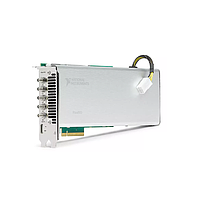
Some measurement tasks go beyond conventional bench oscilloscope expectations and require very high sampling performance, high analog bandwidth, or integration with programmable processing. In that context, devices such as the NI PCIe-5775 FlexRIO Digitizer can be relevant within an NI-based test architecture. These models combine fast waveform acquisition with FPGA-based flexibility for demanding applications.
While a digitizer is not the same thing as a standard oscilloscope in day-to-day usage, it belongs to the same broader measurement conversation when engineers need to capture and process fast analog signals. This is especially useful in custom validation systems, embedded test platforms, and applications where data must be streamed, analyzed, or acted upon in real time.
How to choose the right NI oscilloscope setup
A practical selection process starts with the signal itself. Consider the maximum frequency content, expected amplitude, reference scheme, and whether the measurement is single-ended or differential. Then review the probe attenuation and voltage range needed to keep the signal within the safe and useful operating window of the instrument chain.
It is also worth thinking about how the oscilloscope will be used in the full test setup. If the requirement is mainly bench troubleshooting, a straightforward passive probe configuration may be enough. If the goal is high-speed design validation or low-loading measurement on sensitive nodes, active probing becomes more relevant. If the oscilloscope must integrate with communications or automated control, supporting categories such as GPIB, serial, and Ethernet interfaces may also be part of the broader solution.
Representative products in this category
This category includes several NI probe options that illustrate different measurement priorities. The NI SP200B supports general signal observation at moderate bandwidth, while the NI SP500X and NI SP500C extend passive probing choices with different attenuation characteristics. For higher-frequency work, the NI SA1000X, NI SA1500X, and NI SA2500X provide active single-ended options, and the NI-5191 addresses differential active measurement needs.
Together, these products show that oscilloscope performance is not defined by the instrument body alone. The final result depends on the complete signal path, including probe behavior, measurement topology, and how the oscilloscope is integrated into the test environment.
Finding the right fit for your application
Whether you are validating prototypes, analyzing fast switching events, or building an automated electronic test system, the right NI oscilloscope setup should be chosen around the signals you actually need to capture. Probe type, attenuation, bandwidth, and system integration all influence measurement quality far more than a simple product label suggests.
Browse this category to compare NI oscilloscope-related options and identify the combination that matches your voltage range, frequency content, and application workflow. A well-matched measurement chain makes troubleshooting faster, verification more reliable, and test system design easier to scale.
Get exclusive volume discounts, bulk pricing updates, and new product alerts delivered directly to your inbox.
By subscribing, you agree to our Terms of Service and Privacy Policy.
Direct access to our certified experts