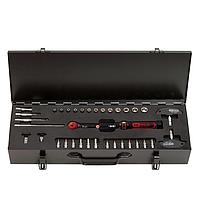
Hand multiplier
When standard hand tools are no longer enough to achieve the required tightening force, a hand multiplier becomes a practical solution for controlled high-torque work. These tools are commonly used where large fasteners must be tightened or loosened without relying on powered equipment, especially in maintenance, heavy industry, and field service environments.
For B2B buyers, the key value of this category is not only higher output torque, but also safer and more repeatable manual operation. A well-selected torque multiplier helps reduce operator effort, improves access in demanding applications, and supports more stable fastening results on critical bolted joints.
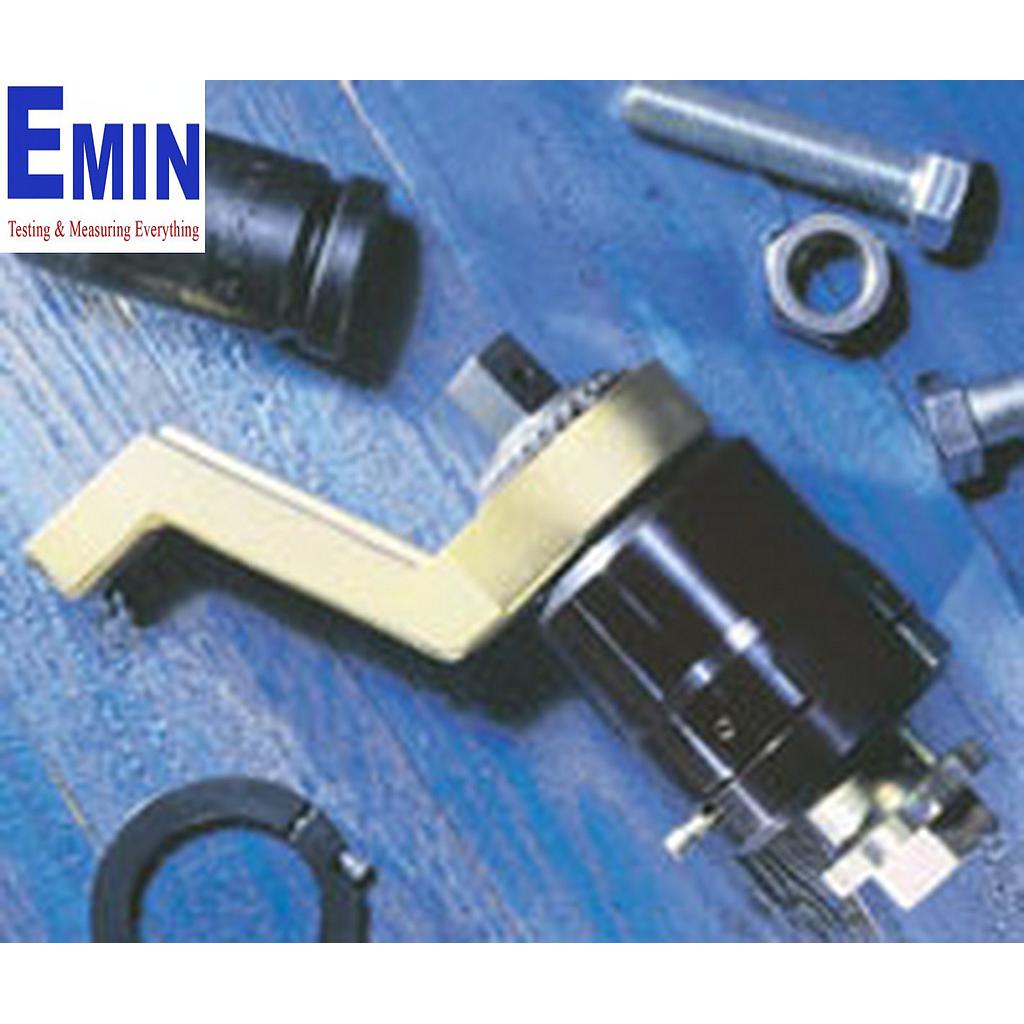
Why hand multipliers are used in industrial fastening
A manual torque multiplier increases the torque applied at the output by using a gear reduction mechanism. In practice, this allows an operator to generate very high torque from a lower input force, making it easier to handle large bolts and nuts in equipment assembly, plant maintenance, structural work, and heavy mechanical servicing.
This type of tool is especially relevant when precision and operator safety matter more than speed alone. Compared with using long breaker bars or improvised leverage, a torque multiplier offers a more controlled method for high-load fastening tasks, particularly where access is limited or where repetitive heavy tightening would otherwise create unnecessary strain.
Typical applications for manual torque multipliers
Hand multipliers are widely chosen for bolted connections that require substantial tightening force. Common use cases include industrial machinery installation, maintenance of flanges and pipe systems, service work on heavy equipment, and assembly tasks involving large fasteners that exceed the practical range of standard hand tools.
They are also useful in locations where compressed air or electric tools are not ideal, such as remote job sites or controlled maintenance areas. In these situations, manual operation can provide a better balance of portability, reliability, and torque capacity, especially when paired with suitable accessories from a socket wrench set for the fastening size involved.
Representative products in this category
This category includes a broad torque range for different levels of fastening demand. At the heavy-duty end, models such as the Protorque HT13/125 Manual Torque Multiplier reach very high output torque for large industrial joints, while the Protorque HT12/875 and HT11 series support demanding applications where substantial multiplication is still required in a more compact format.
For mid-range and general heavy maintenance work, options like the Protorque HT9/125, HT9/25, and HT7 series cover a useful span of torque outputs and gear ratios. Lighter models such as the Protorque HT6/25 can be suitable where high torque is needed, but overall tool size and handling remain important selection factors.
Buyers comparing these products should pay attention to the relationship between torque range, gear ratio, input drive, output drive, and tool weight. These factors affect not only performance, but also usability in the actual working environment.
How to choose the right hand multiplier
The first step is to define the required output torque for the application, including any safety margin needed for the joint. Oversizing may increase weight and reduce handling convenience, while undersizing can lead to inefficient operation or an inability to reach the target tightening level.
Next, consider the gear ratio. Higher ratios reduce the input effort needed from the operator, but they also increase the number of turns required. Lower ratios may suit applications where a faster output is preferred and the operator can still comfortably deliver the needed input torque.
Drive size compatibility is equally important. The input square and output square must match the available tooling and the socket sizes used on site. If the work involves a wider fastening toolkit, it may also be useful to review related assembly tools or maintenance accessories such as a repair kit for broader service operations.
Brand landscape and sourcing considerations
This category may be relevant for buyers already familiar with industrial torque tooling from brands such as Mountz, Tohnichi, KS Tools, TOPTUL, and Protorque. While product availability and range differ by manufacturer, these names are often associated with professional fastening and torque-control applications in industrial settings.
Within the current featured products, Protorque stands out with multiple manual torque multiplier models covering several torque classes and ratios. That makes it easier to compare configurations within one product family when the goal is to standardize tooling across maintenance teams or different bolt sizes.
What matters in day-to-day use
In real working conditions, selection should not be based on maximum torque alone. Tool weight, reaction support, available working space, and operator handling all affect efficiency and safety. A 6,000 N.m class multiplier used regularly in maintenance work may be more practical for a team than a much larger model if the application does not require the higher range.
It is also worth planning the surrounding tool setup. Appropriate sockets, access tools, and supporting hand tools can make a significant difference in workflow. For technicians who work across varied mechanical tasks, categories such as other assembly tools may help complete the broader toolkit around high-torque fastening jobs.
Short FAQ
Is a hand multiplier the same as a torque wrench?
No. A hand multiplier increases torque mechanically, while a torque wrench is generally used to apply or verify a specific torque value. In many applications, they may be used as part of the same fastening process, but they serve different functions.
When is a manual torque multiplier preferred over powered tools?
It is often preferred when mobility, simplicity, or controlled manual operation is important, or when air and electric tools are impractical for the job site or maintenance environment.
Why do gear ratios matter?
The ratio determines how much output torque is generated from the input torque. It directly affects operator effort and the speed of tightening, so it should be matched to the application rather than chosen on output torque alone.
Choosing with application fit in mind
The most effective way to select from this manual torque multiplier range is to start with the fastening requirement, then match it to torque capacity, ratio, drive size, and handling conditions. Whether the task involves heavy industrial maintenance or controlled high-torque assembly, the right tool should support both performance and safe manual use.
By comparing realistic torque needs with practical factors such as weight, access, and tooling compatibility, buyers can narrow the range quickly and choose a hand multiplier that fits the job instead of simply choosing the largest model available.
Get exclusive volume discounts, bulk pricing updates, and new product alerts delivered directly to your inbox.
By subscribing, you agree to our Terms of Service and Privacy Policy.
Direct access to our certified experts