Have You Heard the Truth About UPS Systems?
By the end of the 20th century, the power system in developed countries had reached a very high level of stability, with a continuous power maintenance rate of up to 99.9%. On average, the power outage time in a year is only about 8 hours, and is usually only a short interruption of a few minutes. For simple devices such as lighting or conventional electric motors, power failures at this level have almost no significant impact. For these applications, users only need to pay attention to basic factors such as voltage and frequency when assessing the quality of the power source.
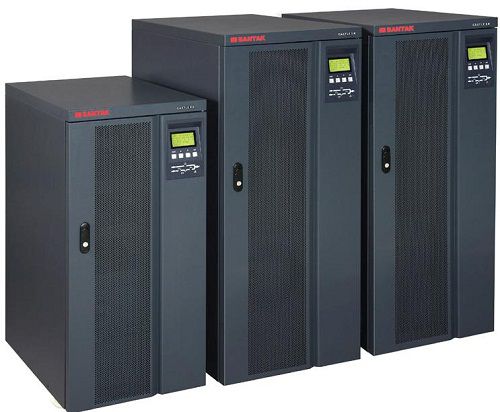
However, with the advent of digital technology, especially in computer systems and data centers, the demands on power supplies have been pushed to a whole new level. Devices using digital platforms are inherently sensitive to fluctuations in power supply, requiring the supply to be absolutely stable. Even a small interruption of a few milliseconds can cause the entire system to malfunction, lose data, or interrupt processing. It is this pressure from the need for stability that has led to the birth of uninterruptible power supplies, a solution to protect the power supply from sudden fluctuations and keep the system running smoothly even when there is a power failure.
Uninterruptible Power Supply (UPS) is designed to fulfill two key roles: providing backup power and protecting electrical equipment from risks from input power sources, such as power fluctuations, voltage drops, sudden power outages or overloads. In essence, UPS helps stabilize the quality of the power supply and ensures that power is maintained continuously when an incident occurs. Depending on the capacity level, this device will keep the system running for a period of time long enough for users to back up data, shut down properly and minimize the risk of damage to the equipment in use.
For businesses, especially in the IT sector, UPS has long been no longer an option but a mandatory requirement if they want to ensure the safety of digital infrastructure such as servers, storage devices, network systems or dedicated workstations. And in recent years, when smart homes have become a popular trend, power outages are no longer just a nuisance but also pose potential security and safety risks, such as automatic doors getting stuck or monitoring systems stopping working. Therefore, UPSs are increasingly of interest to individual users, becoming an essential part of the entire living space, not just limited to the working environment.
Pioneer brand in the UPS market
When it comes to UPS equipment, Eaton cannot be ignored, a veteran brand from the US with a history of more than a century of development. This is always a name that is trusted by experts and users, especially in industries with high requirements for stability such as healthcare, defense, automation systems and data centers. Not only because of the reliability of the product, Eaton's UPS is also highly appreciated for its ability to operate durably over time and its professional, meticulous after-sales service.
Eaton's product portfolio is quite diverse, ranging from small capacity models for individuals to complex systems for large-scale businesses. Another plus is the flexible design of the device, users can install it in a vertical form (Tower) or integrate it neatly in a rack cabinet, very convenient when needing to optimize space or deploy a centralized electrical system.