Temperature Switches
When a process needs a simple, reliable action at a defined temperature, a switch is often the most practical choice. Instead of continuously displaying values like an indicator or feeding a control loop like a transmitter, Temperature Switches are used to open or close an electrical circuit when a preset temperature is reached.
That makes them a common fit for equipment protection, alarm functions, freeze prevention, HVAC safety, and basic on/off control in industrial systems. On this page, you can compare temperature switch options for different sensing ranges, deadband requirements, installation styles, and application environments.
Where temperature switches are typically used
In many plants and building systems, temperature switching is less about measurement visibility and more about taking action at the right point. Typical uses include shutting down equipment on high temperature, enabling fans or heaters, protecting coils from freezing, and triggering alarms when a process moves outside its safe operating range.
These devices are widely used in boilers, heat exchangers, piping systems, storage vessels, refrigeration circuits, air handling equipment, and utility skids. In applications where operators also need local readout or trending, it may be useful to pair switch-based control with temperature meters and indicators for added visibility.
Common temperature switch styles in this category
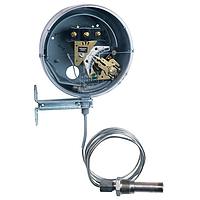
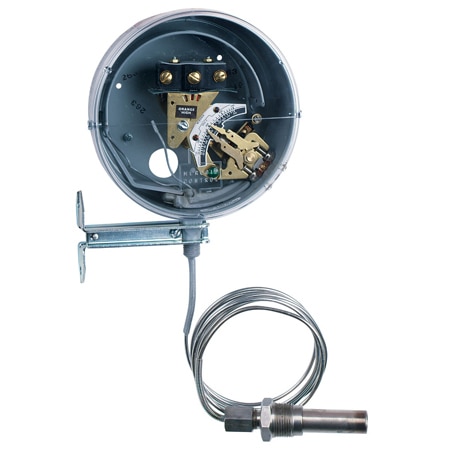
This category includes several practical configurations for industrial temperature control. One common type is the capillary-style mechanical switch, which senses process temperature and actuates contacts once the set point is reached. These models are often selected for rugged field use because they can provide direct switching without requiring a separate controller.
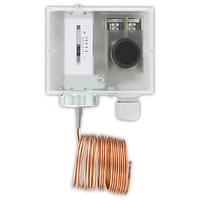
Another important style is the freeze protection switch, designed for low-limit protection in HVAC and similar systems. These units are commonly used to help prevent coil damage or system faults in cold conditions by initiating an alarm or shutdown when temperature drops toward a critical threshold.
There are also accessory items that support setup or maintenance. For example, the Dwyer TS2-K Temp Switch Config Key is an accessory intended for compatibility with specific switch families such as TS2, TSS2, TSX, TSF, and TSWB, making it relevant within the broader switching ecosystem rather than as a standalone control device.
Examples from leading manufacturers
Dwyer is strongly represented in this category, with models covering low-temperature protection as well as high-sensitivity process switching. The DFS2-DM10 and DFS2-DM20 low-limit freeze protection switches are examples suited to applications where manual reset and capillary-based sensing are important for safety-oriented response.
For higher process temperatures, the Dwyer DA series illustrates how switch selection can vary by range and deadband. Models such as DA-7035-153-1N, DA-7035-153-4N, DA-7035-153-5N, and higher-range variants like DA-7035-153-8N or DA-7035-153-11N support applications from low-temperature monitoring up to elevated process conditions. Across a broader sourcing strategy, buyers may also compare solutions from Jumo and OMEGA where brand preference, standardization, or project requirements call for it.
What to consider when selecting a temperature switch
The first step is defining the switching temperature range that matches the actual process. A switch intended for low-temperature protection should not be treated the same as one used for high-temperature equipment shutdown. The process minimum, process maximum, and expected normal operating band all affect whether a given model is appropriate.
Next, consider deadband and reset behavior. A narrow deadband can support tighter response, while a wider deadband may help reduce nuisance cycling in some systems. Manual reset may be preferred in safety-related situations because it forces operator acknowledgement before restart, while adjustable set point and external adjustment features can simplify field commissioning.
Electrical rating, enclosure style, and connection details are also important. Contact type, conduit connection, environmental exposure, and process connection format should all align with the installation. If the application also needs supporting components such as installation parts or related add-ons, browsing temperature accessories can help complete the setup.
Material and application fit
Material compatibility matters because the sensing assembly must withstand both the media and the surrounding environment. Within the featured products here, some models use copper while others use 304 stainless steel, and that difference can influence suitability depending on temperature range, corrosion concerns, and plant standards.
For example, stainless steel constructions are often considered where harsher service conditions or broader chemical exposure are expected, while other builds may be chosen for general-purpose duties. The key is not to select purely by temperature range alone, but to look at the full application context: media, ambient conditions, mounting method, electrical load, and service philosophy.
Related temperature products that may support the same application
Not every temperature-related task is best handled by a switch. Some maintenance teams use temperature indicating labels for quick visual verification on surfaces or components, especially where continuous wiring is unnecessary. In troubleshooting or inspection workflows, a thermal imaging camera can provide a fast, non-contact view of heat distribution across equipment.
These tools do not replace a hardwired switching function, but they can complement it during commissioning, diagnostics, and preventive maintenance. Choosing the right combination depends on whether the goal is automatic control, operator awareness, fault investigation, or all three together.
How to evaluate product differences on this page
As you compare options, pay attention to the practical differences that affect installation and operation: sensing style, capillary length, process temperature span, reset method, deadband, enclosure type, and switch rating. Even when products appear similar at a glance, those details can significantly change performance in the field.
For instance, the difference between a low-limit freeze protection unit and a high-sensitivity adjustable deadband process switch is not minor; they are intended for different control objectives. Reviewing the product pages carefully will help you match the switch to the required action, rather than simply choosing the nearest temperature range.
Choosing the right temperature switch for reliable control
A well-matched temperature switch can simplify protection and control by delivering a direct response at a defined thermal threshold. Whether the requirement is freeze protection in air handling equipment, high-temperature shutdown in a process line, or a configurable accessory for supported switch families, the best choice depends on how the switch will behave in the real application.
Use this category to compare available models by operating range, sensing arrangement, adjustment features, and installation requirements. If you already know the type of action, temperature band, and mounting style you need, narrowing the selection becomes much more straightforward.
Get exclusive volume discounts, bulk pricing updates, and new product alerts delivered directly to your inbox.
By subscribing, you agree to our Terms of Service and Privacy Policy.
Direct access to our certified experts