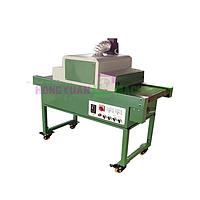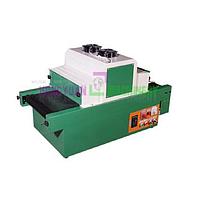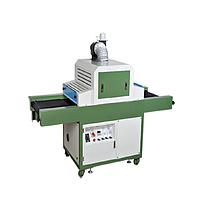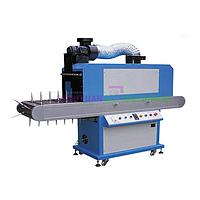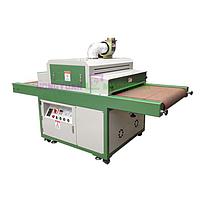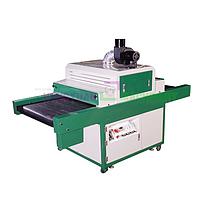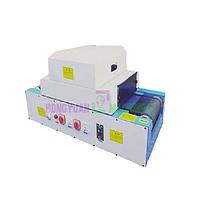
UV Curing Machine
Fast, consistent surface curing matters in many production lines, especially where printed, coated, bonded, or decorated parts need to move quickly to the next process. A well-matched UV Curing Machine helps reduce waiting time, improve throughput, and support more stable finishing quality across flat parts, bottles, labels, and other handled products.
On this category page, you can explore compact desktop units, small conveyor-based systems, and wider conveyor machines designed for higher-volume workflows. The range shown here focuses on practical production needs, from bench-top curing for small parts to conveyor UV dryers suitable for continuous processing.
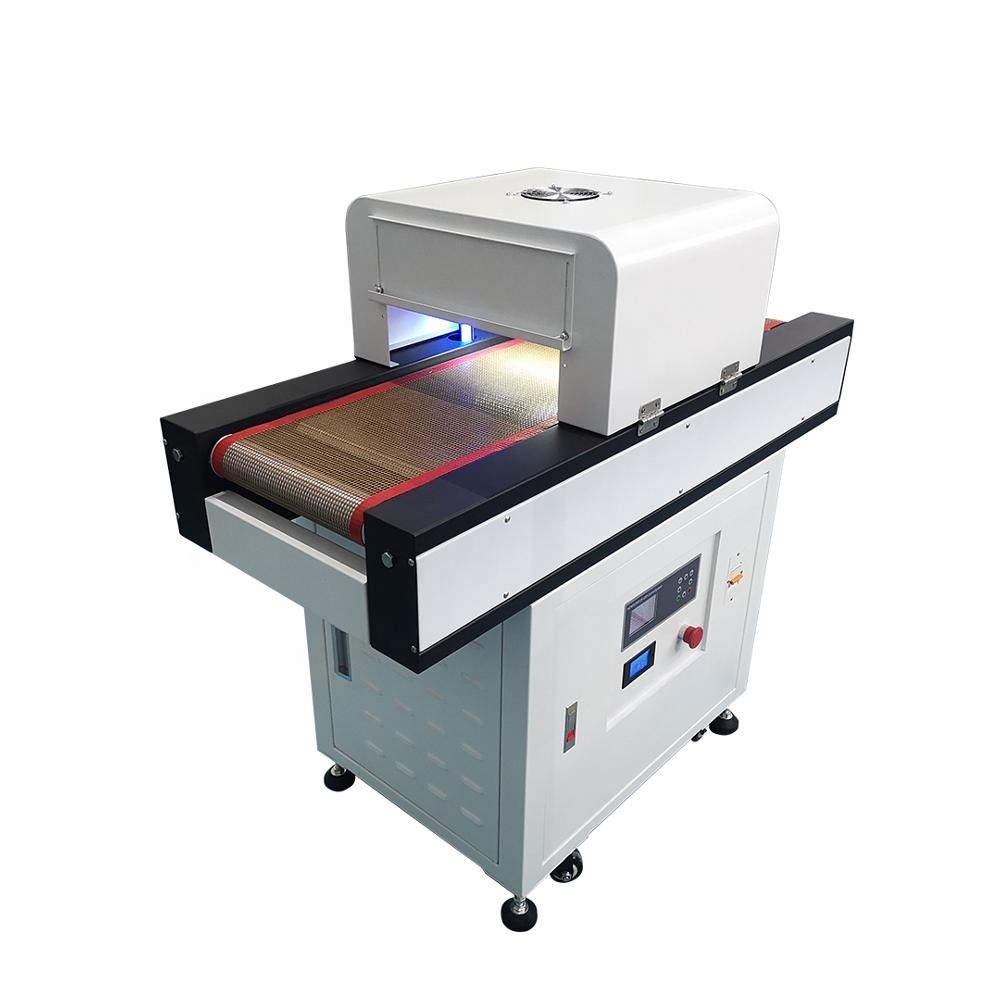
Where UV curing machines fit in production
UV curing is commonly used when a coating, ink, or adhesive is formulated to harden rapidly under ultraviolet light. In manufacturing, this allows parts to move through finishing or assembly steps faster than with conventional air drying alone. It is especially useful where repeatable process timing and compact line layouts are important.
Depending on the product shape and process flow, manufacturers may choose a desktop curing unit for small-batch work or a conveyor machine for continuous operation. In some production environments, UV equipment is also paired with supporting systems such as industrial water cooler/chiller solutions to help manage heat around adjacent equipment or the broader line where needed.
Common machine formats in this category
This category includes several machine styles suited to different operating conditions. Desktop models are typically selected for compact workstations, sample production, or lower-throughput curing tasks. Conveyor UV dryers are more suitable when products need to pass under the lamp zone at a controlled speed for repeatable curing over longer runs.
For example, smaller units such as the Hoystar GW-UV200B and Hoystar GW-UV300A are aligned with space-saving setups, while machines like the Hoystar GW-UV400B Small UV Dryer Machine and Hoystar GW-UV500 Conveyor UV Dryer support wider belts and a more continuous handling approach. For larger product widths, the Hoystar GW-UV700 UV Curing Machine and Hoystar GW-UV1000 UV Curing Machine (1000mm) reflect a move toward broader conveyor coverage and higher-capacity processing.
Choosing by product size, speed, and layout
One of the most important selection points is the relationship between conveyor width, product dimensions, and the required exposure area. A machine that is too narrow may limit throughput or fixture options, while an oversized system can occupy more floor space and power capacity than the process actually needs. Reviewing belt width, allowable product height, and line integration space is usually the best place to start.
Conveyor speed control is also critical. Several models in this category are designed with adjustable speed ranges, which helps operators balance exposure time with line output. If production includes delicate printed surfaces, coated panels, or decorated packaging, fine speed adjustment can make process setup easier and support more stable curing results across changing workloads.
Examples from the Hoystar range
Hoystar is the featured manufacturer in this category, with models covering multiple curing formats. The Hoystar GW-UV300B Desktop Uv Curing Machine and GW-UV400B Small UV Dryer Machine are practical examples for compact curing tasks where a smaller footprint is preferred. These types of machines are often considered for bench-level operations, pilot runs, or light-duty conveyor workflows.
For continuous production, the Hoystar GW-UV500 Conveyor UV Dryer, GW-UV700 UV Curing Machine, and GW-UV1000 UV Curing Machine (1000mm) represent progressively wider conveyor options. The Hoystar GW-UV-B Round UV Curing Machine for Bottle highlights another important application: handling products with a cylindrical format rather than only flat components. This is useful when the curing process must match the geometry of bottles or similar packaging items.
UV curing vs. thermal drying in practical use
Although both methods support drying or hardening, UV curing machines and thermal ovens serve different process needs. UV systems are generally selected when the material is designed to react under ultraviolet light and when fast line speed is a priority. Thermal equipment, on the other hand, may be used for processes requiring heat-based drying over a controlled temperature range.
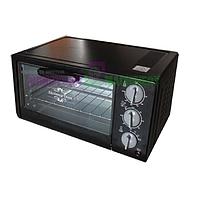
That distinction can be seen in related equipment such as the Hoystar GW-ED Electric Oven Machine For Steel Plate, which is built around heated drying rather than UV exposure. If your process involves shrink packaging or heat-based finishing steps elsewhere in the plant, it may also be helpful to review related equipment such as heat shrinking machines for broader line planning.
Key factors to review before ordering
When comparing machines in this category, buyers typically focus on lamp power, conveyor dimensions, speed adjustability, product clearance, and available power supply. These factors affect not only curing performance but also installation planning, operator workflow, and how easily the machine fits into existing production space.
It is also important to consider the shape of the processed item. Flat sheets, printed panels, small assembled parts, and bottles each place different demands on feeding, exposure consistency, and handling. In environments where UV equipment works alongside pneumatic actuators or air-assisted handling, related compressed air treatment equipment may also be relevant to overall machine reliability and line cleanliness.
Who this category is suitable for
This selection is relevant for manufacturers and integrators looking for curing equipment for printing, coating, decoration, packaging, and light industrial finishing workflows. Compact desktop units can suit workshops, trial production, and low-volume processing, while conveyor models are more appropriate for continuous operation with a repeatable product path.
The category is also useful for buyers who need to compare machine footprint with output goals. Instead of looking only at power rating, it is often more effective to evaluate the full process: product size, desired line speed, available installation space, and whether the curing step is a standalone workstation or part of a larger automated sequence.
Finding the right UV curing machine for your process
The best fit usually comes from matching the curing method to the product geometry and production rhythm rather than choosing the largest machine available. A compact desktop system may be enough for small parts and development work, while a wider conveyor machine can make more sense for regular batch flow and higher output.
By reviewing the available Hoystar models in this category, buyers can compare curing formats ranging from small desktop units to bottle-oriented and larger conveyor-based systems. If you are planning a new line or upgrading an existing one, this category provides a practical starting point for selecting equipment that aligns with your material, layout, and throughput requirements.
Get exclusive volume discounts, bulk pricing updates, and new product alerts delivered directly to your inbox.
By subscribing, you agree to our Terms of Service and Privacy Policy.
Direct access to our certified experts