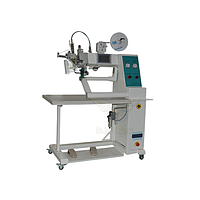
Hot Air Seam Sealing Machine
When a finished textile product must resist water, air, or dust at the seam line, standard stitching alone is often not enough. In those cases, a Hot Air Seam Sealing Machine is used to bond seam tape over stitched or joined areas, helping manufacturers improve sealing performance on coated fabrics, technical textiles, and other demanding materials.
This category focuses on equipment used in garment, outdoor product, protective gear, and industrial fabric production where seam integrity matters as much as appearance and speed. Depending on the application, users may need compact tape sealing machines for rainwear, more specialized systems for diving suits, or complementary ultrasonic equipment for sewfree joining and trimming.
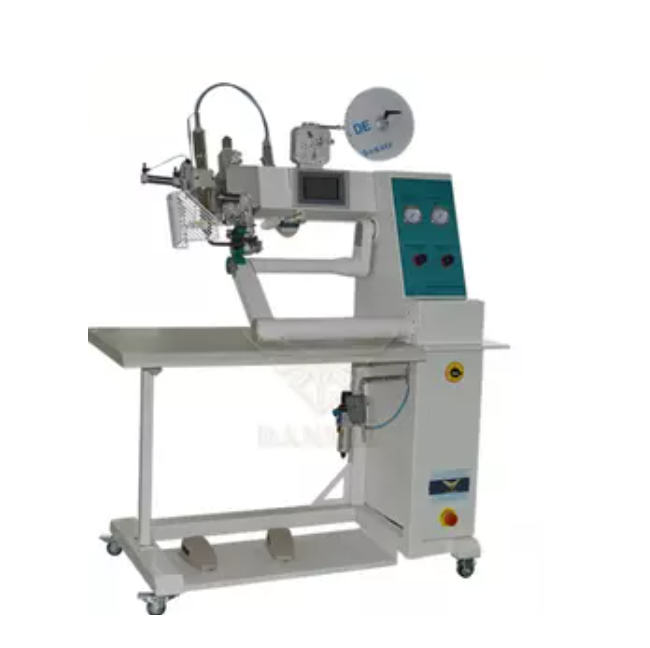
Where hot air seam sealing machines are used
These machines are commonly selected for products made from waterproof or coated materials, especially where leakage through stitched holes would reduce product performance. Typical use cases include rainwear, outdoor apparel, tents, covers, protective clothing, diving-related products, and similar sewn items that require a sealed seam after assembly.
Some production environments also use this equipment for laminated textiles, PU- or TPU-coated fabrics, PVC-based materials, and multilayer technical fabrics. In these applications, the machine supports a more reliable finish by applying controlled heat and pressure so the sealing tape bonds consistently along the seam path.
How the sealing process works
The basic principle is straightforward: hot air softens the tape adhesive and the surface of the target material, while rollers press the tape into place. The result is a continuous sealed line that helps block moisture or air penetration without relying only on needle construction.
In practice, seam quality depends on the balance between temperature, pressure, and travel speed. If the temperature is too low, bonding may be incomplete; if it is too high, the fabric coating can be affected. That is why adjustable process settings are important, particularly when production handles different material thicknesses, tape widths, or garment shapes.
Common machine types in this category
Within this category, there are machines aimed at general waterproof tape sealing as well as models tailored to more specific products. For example, the Danrel DR-F9T Hot Air Waterproof Tape Seam Sealing Machine is suited to applications where waterproof seam finishing is the main priority, while the Danrel DR-F8T Hot Air Tape Sealing Machine for Raincoat reflects a more application-focused setup for rainwear production.
For specialized products, the Danrel DR-F2012T Hot Air Tape Seam Sealing Machine for Diving Suit is relevant when seam reliability is critical in more demanding garment structures. Broader production lines may also consider the Danrel DR-F10T Multifunction Dual Arms Hot Air Seam Tape Sealing Machine when workflow flexibility is needed across different seam positions or product formats.
If you are comparing machine ecosystems by supplier, it can also be useful to review the available range from Danrel or see other industrial joining solutions from H&H where ultrasonic processing is part of the production flow.
Hot air sealing and ultrasonic welding in the same workflow
Not every seam-related application is solved by hot air tape sealing alone. Some manufacturers combine hot air machines with ultrasonic welding equipment to reduce stitching steps, create sewfree joins, trim edges, or process thermoplastic materials in a cleaner and more continuous way.
Examples in the broader product mix include the H&H US-512 Ultrasonic Rotary Welding Machine, H&H US-511 Ultrasonic Rotary Welding Machine, and the H&H US-501 Sewfree Ultrasonic Multi-Purpose Welder. There is also the H&H SF-806 Sewfree Tape Laydown + Ultrasonic Trimmer, which illustrates how tape application and ultrasonic finishing can support a more integrated sealing workflow for selected materials and designs.
For buyers evaluating adjacent production equipment, related categories such as heat shrinking machines or industrial chillers may also be relevant depending on the rest of the manufacturing line.
What to look for when choosing a machine
Selection usually starts with the material. Coated fabrics, multilayer laminates, and thick technical textiles do not respond the same way to heat, pressure, and roller contact, so the machine should match the real production material rather than only the final product name. Adjustable hot air temperature range, supported tape width, seam roller configuration, and speed control are all practical points to review.
Production volume is another key factor. A workshop handling short runs and many product changes may value setup flexibility and easier parameter adjustment, while a higher-output line may focus more on repeatability, seam consistency, and stable operation across long shifts. Machines in this category commonly provide adjustable speed and temperature settings to support that process control.
It is also important to check plant utilities. Some models require compressed air for stable operation, so supporting infrastructure matters just as much as the sealing head itself. Where that is part of the setup, browsing compressed air treatment equipment can help ensure the air supply side is suitable for long-term machine performance.
Examples from the current product range
The listed machines cover a practical spread of applications. The Danrel DR-F6T Hot Air Tape Seam Sealing Machine supports general seam sealing work with adjustable operating parameters, while the Danrel DR-F11T Hot Air Seam Tape Heat Sealing Machine is aligned with continuous tape sealing tasks where temperature and speed control are essential.
For waterproof-focused applications, the Danrel DR-V12 Hot Air Waterproof Tape Seam Sealing Machine and 3M DR-F7T Hot Air Seam Tape Sealing Machine show how this category can serve users looking for different brand options while staying within a similar process method. Rather than choosing by brand alone, it is usually better to compare the machine format, intended end product, and how well the controls fit the actual material mix in production.
Why this category matters for technical textile production
In many sewn waterproof products, the seam is the weakest point unless it is properly sealed. A suitable machine helps improve product consistency, reduce leakage risk, and support a more controlled finishing process across garments and industrial textile products that need dependable seam performance.
For B2B buyers, this category is less about a single machine specification and more about finding the right balance between material compatibility, production speed, seam quality, and factory integration. Reviewing the available models in context makes it easier to identify whether a general-purpose hot air tape sealing machine, a waterproof-focused system, or a combined ultrasonic solution is the better fit for the application.
Final considerations
Choosing the right seam sealing equipment starts with understanding the product requirement at the seam itself: waterproofing, airtightness, dust resistance, appearance, or production efficiency. From there, the best option is the one that matches the fabric structure, tape format, throughput target, and available utilities on the line.
This category brings together machines for both standard and specialized seam sealing tasks, with examples from Danrel, 3M, and H&H that can help narrow down the right direction. If you are comparing solutions for technical textiles or waterproof garment manufacturing, reviewing these models side by side is a practical way to move from general search to equipment shortlist.
Get exclusive volume discounts, bulk pricing updates, and new product alerts delivered directly to your inbox.
By subscribing, you agree to our Terms of Service and Privacy Policy.
Direct access to our certified experts