Pull Off Tester for Concrete Repair Service
Reliable adhesion testing depends not only on the test method, but also on the condition of the instrument itself. When a pull-off tester is used to evaluate bond strength in concrete repair, coating inspection, or substrate preparation work, wear, impact, improper handling, or drift over time can affect both accuracy and repeatability. This is why professional Pull Off Tester for Concrete Repair Service support is important for laboratories, contractors, inspectors, and maintenance teams that rely on dependable field and site measurements.
Why pull-off tester service matters in concrete repair work
A pull-off tester is commonly used to assess the tensile bond between a repair material, coating, overlay, or surface treatment and the underlying concrete. In practice, the quality of that measurement depends on more than operator skill. The mechanical loading system, gauge response, fixtures, and overall instrument condition all influence whether results are stable and trustworthy.
Regular service helps reduce the risk of inconsistent readings, mechanical faults, or unexpected downtime during inspection schedules. For organizations working on structural repair, quality assurance, or site acceptance testing, keeping the tester in good operating condition supports better decision-making and more reliable documentation.
What this repair service typically supports
This category focuses on service needs related to pull-off testers used in concrete repair applications. Typical support may involve inspection of the instrument condition, troubleshooting performance issues, repair of worn or damaged parts, and restoration of normal operation where possible. The goal is to return the equipment to a usable and dependable state for continued field or lab work.
Where relevant, users looking after a broader concrete testing fleet may also need support for related devices such as concrete test hammer repair services or concrete ultrasonic detector repair, especially when multiple nondestructive and semi-destructive methods are used together on the same project.
Common issues seen in pull-off testers
Instruments used on construction sites and repair projects are exposed to dust, vibration, transport damage, and frequent setup changes. Over time, this can lead to problems such as unstable readings, sticking mechanical components, damaged loading assemblies, worn accessories, or difficulty achieving smooth and controlled test force application. Even when the instrument still powers on or appears functional, measurement behavior may no longer be consistent.
Service is also important after accidental dropping, heavy use across multiple sites, or long storage periods. If the tester is part of a documented quality process, any uncertainty around instrument performance can create delays in reporting or require retesting. Addressing issues early is usually more efficient than waiting for a complete failure during active testing work.
Example instrument covered in this category
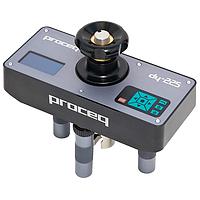
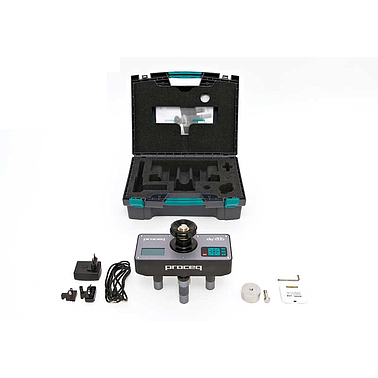
A representative product in this category is the Proceq Pull Off Tester For Concrete Repair Service. This reflects service demand for equipment from PROCEQ, a recognized manufacturer in concrete testing and inspection. Mentioning this product helps clarify the type of instrument supported within the category, without limiting the discussion to a single repair scenario.
For users managing other concrete evaluation tools alongside pull-off testing equipment, it can also be useful to review adjacent services such as cover meter and rebar detector repair. This is especially relevant when bond performance, reinforcement location, and surface condition all form part of one inspection workflow.
How to decide when service is needed
Not every issue appears as a complete breakdown. In many cases, the first signs are subtle: readings that seem harder to reproduce, components that no longer move smoothly, visible wear on loading parts, or uncertainty about whether the instrument is still performing as expected after extensive site use. These are practical indicators that inspection and repair should be considered.
A scheduled service approach is often more effective than reactive repair alone. Teams that use pull-off testers regularly for repair verification, coating adhesion work, or acceptance testing benefit from checking instrument condition before major projects, after intensive field campaigns, or whenever traceable and defensible results are important to the job.
Repair service in the context of a broader testing workflow
Pull-off testing is often only one part of the assessment process in concrete maintenance and rehabilitation. Engineers and inspectors may combine it with rebound testing, ultrasonic evaluation, permeability assessment, or corrosion-related investigation depending on project requirements. Because of this, repair planning is often easier when viewed as part of an integrated equipment maintenance strategy rather than as an isolated instrument issue.
If your team also works with durability and condition assessment tools, related support categories such as rebar corrosion detection repair service may be relevant. This kind of coordinated upkeep helps reduce unplanned downtime across the broader concrete testing toolkit.
What to prepare before sending a unit for service
Before arranging repair, it is useful to note the observed fault, recent usage conditions, and whether the issue is constant or intermittent. Basic information such as the instrument model, visible damage, missing accessories, and when the problem first appeared can help speed up evaluation. If the tester has been used in a regulated or documented quality environment, keeping prior service records available may also support a more efficient service process.
It is also worth checking whether the problem involves the main instrument body, loading mechanism, attached fixtures, or test accessories. A clear description helps avoid unnecessary delays and supports a more targeted inspection. For users with multiple site instruments, creating a simple service history for each unit can improve maintenance planning over time.
Choosing the right service path
The right repair approach depends on how the tester is used, the condition of the unit, and how critical the measurement is to your workflow. For occasional use, restoring normal function may be the immediate priority. For routine inspection programs, greater emphasis is often placed on consistent performance, reduced downtime, and service planning across several related devices.
This category is intended to help buyers and technical users find appropriate support for pull-off testing equipment used in concrete repair applications. If your work depends on reliable bond strength evaluation, timely service can help extend equipment usability, improve confidence in test results, and keep inspection activities moving with fewer interruptions.
Get exclusive volume discounts, bulk pricing updates, and new product alerts delivered directly to your inbox.
By subscribing, you agree to our Terms of Service and Privacy Policy.
Direct access to our certified experts