
Digital I/O
When a control system needs to read switch states, drive relays, interface with PLC-level signals, or handle fast custom digital logic, choosing the right digital hardware becomes critical. This Digital I/O range brings together NI devices designed for practical signal interfacing in test systems, industrial automation, embedded control, and lab development environments.
Within the broader data acquisition and control ecosystem, digital I/O hardware supports everything from simple USB-based signal handling to FPGA-based reconfigurable platforms for more demanding timing and logic tasks. That makes this category relevant not only for basic on/off control, but also for engineers building scalable systems that combine measurement, communication, and hardware-level automation.
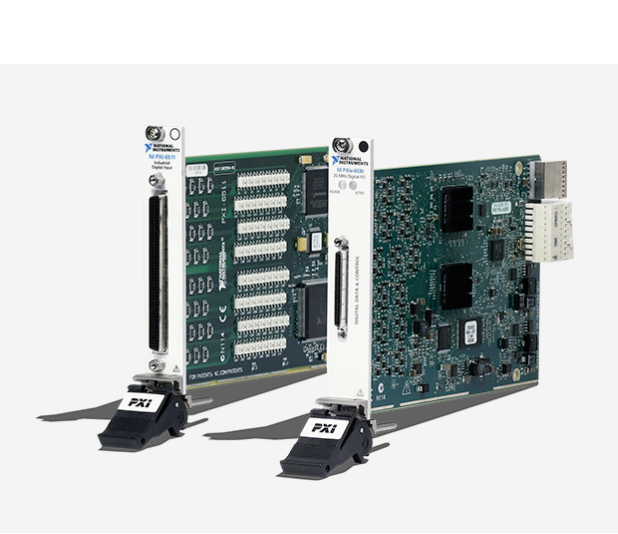
Where digital I/O fits in real applications
Digital input/output devices are used whenever a system must interact with discrete electrical states rather than continuously varying analog signals. Typical examples include reading sensors with switching outputs, monitoring interlocks, driving indicators, controlling relays or solenoids, and exchanging status signals between instruments and machines.
In many projects, digital channels are part of a larger measurement and control architecture. A test bench may combine discrete control with analog measurement, while an automation cell may use digital signals alongside field communication or protocol interfaces. If your application also needs broader mixed-signal capabilities, related multifunction I/O hardware can be a useful complement.
Different device types for different control tasks
This category spans several practical hardware approaches. USB-connected devices are often chosen for bench setups, engineering validation, and portable control tasks. PCI and PCI Express boards are more suitable when the system is built into a host PC and requires tighter integration, higher channel density, or more advanced deterministic processing.
Modular hardware also plays an important role when digital outputs need to switch external loads cleanly and safely. For example, the NI-9481 C Series relay output module is designed around relay-based switching rather than standard logic-level outputs, which makes it relevant for applications that need isolated contact-style control inside CompactDAQ or CompactRIO systems.
Representative NI options in this category
NI offers several digital I/O approaches depending on the signal type, interface, and level of programmability required. For straightforward USB connectivity, models such as the NI USB-6501 and NI USB-6509 are suited to general-purpose digital line access, with different channel counts for smaller or denser signal requirements. The NI USB-6525 stands out when applications need more robust voltage handling for industrial-style discrete I/O.
For projects that go beyond simple static digital control, reconfigurable boards such as the NI PCIe-7820, NI PCIe-7822, NI PCI-7811, and NI PCI-7813 provide FPGA-based digital processing. These platforms are better aligned with custom timing, hardware-defined state machines, and parallel digital tasks that would be difficult to implement reliably with basic software-timed USB devices alone.
There are also interface-focused products in the range, such as the NI USB-8451 and NI USB-8452, intended for I²C and SPI communication. While these are not general digital I/O modules in the same sense as static input/output hardware, they are highly relevant when a digital control setup must communicate with peripheral chips, embedded boards, or serial digital components.
How to choose the right digital I/O hardware
A good selection process starts with the signal itself. Consider whether you need digital inputs, digital outputs, or bidirectional lines, and whether the connected equipment uses logic-level signaling or higher industrial voltage levels. Current drive capability, input voltage range, and the need for relay contacts versus transistor-style outputs can make a major difference in compatibility.
The next factor is timing and system architecture. USB devices are often adequate for monitoring states, driving outputs, and general control from a PC application. If the task involves custom hardware timing, synchronized digital patterns, or real-time logic execution, FPGA-based boards are usually more appropriate. Engineers working with discrete signal switching may also want to compare this category with broader industrial communication bus solutions when control must extend beyond direct wired I/O.
Physical integration also matters. Compact external devices are easier to deploy for development stations and temporary setups, while internal PCI or PCIe cards are a better fit for fixed industrial PCs or rack-mounted test systems. Modular relay output hardware is often preferred when channel isolation and switching behavior are more important than raw digital density.
Understanding digital I/O versus protocol interfaces and analog measurement
Not every digital application is solved by the same class of hardware. Standard digital I/O is designed for discrete states such as high/low, on/off, open/closed, or pulse events. By contrast, protocol interface devices like the USB-8451 and USB-8452 are built for structured communication over buses such as I²C and SPI, where timing, framing, and command exchange are part of the task.
It is also important to separate digital channels from analog measurement needs. If the project requires sensing variable electrical values rather than simple states, dedicated categories such as voltage measurement hardware may be more suitable. In practice, many systems combine both, using analog channels for process values and digital lines for triggers, status signals, and actuator control.
Typical use cases across test, automation, and embedded development
In automated test systems, digital I/O commonly handles fixture interlocks, pass/fail lamps, relay control, trigger distribution, and DUT status monitoring. USB-based NI devices can be a practical fit when the control requirements are moderate and deployment simplicity is important.
In machine and process environments, digital channels are often used to read proximity sensors, limit switches, and operator pushbuttons while driving contactors, indicator stacks, or external relays. Where the signal environment is electrically tougher, choosing hardware with suitable voltage tolerance and output characteristics becomes essential.
In embedded and electronics development, engineers often need to validate board-level behavior, access serial peripherals, or prototype custom digital logic. That is where the range from standard USB digital devices to FPGA-based PCIe boards and I²C/SPI interfaces becomes especially useful, because the hardware can match both simple lab control and more advanced low-level development tasks.
Building a more scalable NI-based control system
One advantage of this category is how well it supports incremental system design. A project may begin with a compact USB digital device for bench validation, then evolve toward modular relay outputs or reconfigurable PCIe hardware as timing, channel count, or determinism requirements become more demanding. This makes the category relevant to both prototype work and long-term system deployment.
For users already working within NI-based measurement platforms, digital I/O can also be combined naturally with related digital signal interface options in the same product family. The key is to align the hardware with the real behavior of the application rather than selecting only by interface type or channel count.
Final considerations
The right digital I/O device depends on how your system must interact with the real world: simple logic-level control, higher-voltage discrete interfacing, relay-based switching, serial peripheral communication, or FPGA-driven custom digital behavior. This category brings together NI solutions that address those different needs without forcing every application into the same hardware model.
By comparing signal levels, channel direction, timing expectations, and installation format, engineers can narrow the selection quickly and build a more reliable control architecture. If your project spans measurement, switching, and communications, this category is a practical starting point for identifying the most suitable digital interface for the job.
Get exclusive volume discounts, bulk pricing updates, and new product alerts delivered directly to your inbox.
By subscribing, you agree to our Terms of Service and Privacy Policy.
Direct access to our certified experts