
Earth resistance/Resistivity Tester
Reliable grounding is one of the foundations of electrical safety, especially in power distribution, telecom sites, industrial plants, and lightning protection systems. When engineers need to verify grounding quality or evaluate soil conditions before installation, an Earth resistance/Resistivity Tester becomes an essential instrument for field measurement and maintenance work.
This category brings together instruments and accessory kits used to measure earth resistance, loop resistance, and soil resistivity with methods suited to different site conditions. Whether the job requires a straightforward 3-pole test, a 4-pole measurement for improved accuracy, or clamp-based testing on live grounding networks, the right tester helps produce repeatable data for inspection, commissioning, and preventive maintenance.
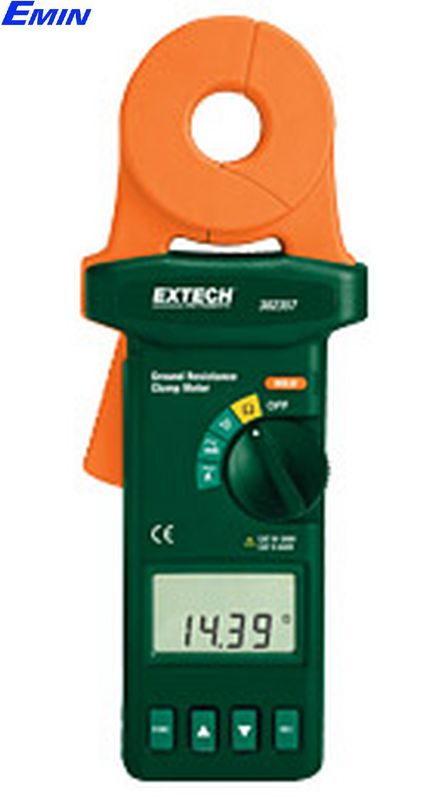
Where earth resistance and resistivity testing is used
Grounding performance affects both equipment protection and personnel safety. In practical applications, these testers are used to check earthing systems for buildings, substations, telecom infrastructure, control panels, renewable energy installations, and industrial facilities where a low-resistance path to earth is required.
Soil resistivity measurement is equally important during the design stage. Before installing rods, grids, or other grounding arrangements, engineers often assess the behavior of the soil to estimate how the grounding system will perform over time. This is especially useful in locations where moisture, temperature, and soil composition can change the final resistance significantly.
Common measurement approaches in this category
Different sites call for different test methods. Traditional 3-pole and 4-pole measurement remains widely used for earth resistance verification because it offers a practical balance between setup effort and measurement confidence. These methods are common when there is enough space to place auxiliary stakes and test leads around the grounding point.
For more advanced field work, some instruments also support selective and stakeless testing using clamps. This is useful on complex grounding networks where disconnecting the electrode is impractical or where downtime must be minimized. Clamp-based testing can also help maintenance teams work faster in operating facilities.
In resistivity surveys, methods such as Wenner or Schlumberger are often used to evaluate the electrical properties of the soil. For related troubleshooting tasks in damaged or leaking installations, users may also review solutions in the ground fault locator category when resistance measurement alone is not enough.
Representative instruments and kits
Several products in this category illustrate the range of testing needs covered. The FLUKE FLUKE-1630-2 Earth Ground Clamp is designed for clamp-based ground loop resistance and leakage current measurement, making it suitable for applications where stake-free testing is preferred. The FLUKE FLUKE-1630-2 FC Earth Ground Clamp serves a similar role for maintenance teams that want a compact clamp solution for grounding checks.
For stake-based testing, the FLUKE FLUKE-1623-2 GEO Earth Ground Resistance Meter (3, 4 poles) supports 3-pole and 4-pole measurements and can be used in broader commissioning work. From Chauvin Arnoux, models such as the Chauvin Arnoux C.A 6460 Earth and resistivity testers and CA 6462+100 M RESISTIVITY KIT are relevant when both earth resistance and soil resistivity must be evaluated in the same project.
Accessory sets also play an important role. Products such as the Chauvin Arnoux P01102021 3P Earth Kit, Chauvin Arnoux 4P Earth/Resistivity Kit, and P01102025 Earth/Resistivity Kit provide rods, reels, cables, and transport accessories needed for field deployment. Calibration and validation accessories such as the Chauvin Arnoux P01122301 Calibration loop can also support checking instrument condition before critical measurements.
How to choose the right tester
The first selection point is the test method required on site. If the job is mainly periodic inspection of installed grounding systems in operating facilities, a clamp-based tester may be the most efficient option. If you need formal earth resistance verification with auxiliary electrodes, or if you must assess soil resistivity before grounding design, a dedicated 3-pole or 4-pole instrument is usually a better fit.
Next, consider measurement range, expected site conditions, and the type of accessories included. Long cable sets, auxiliary stakes, and clear lead identification can make a major difference in field productivity. Instruments such as KYORITSU 4105DL Earth Testers are suitable where basic earth resistance and earth voltage measurements are required in a compact handheld format.
It is also worth checking safety category, data logging capability, operating environment, and whether the instrument supports leakage current or selective measurements. In service work, these practical details often matter as much as the nominal accuracy shown on a specification sheet. For general electrical verification alongside grounding tests, a digital multimeter is often used as a complementary tool.
Why accessory kits matter in real field work
Many grounding measurements are only as reliable as the test setup. Proper stake placement, sufficient cable length, and stable contact with the soil all influence the result. That is why complete field kits remain highly relevant, especially for outdoor commissioning, lightning protection checks, and large-area soil surveys.
Chauvin Arnoux accessory sets in this category show how test ecosystems are built around the main instrument. Depending on the application, users may need a simple 3P kit for routine earth testing or a larger earth/resistivity kit with multiple reels and rods for wider spacing during resistivity measurement. Choosing the tester without considering the kit can lead to unnecessary delays on site.
Typical users and project scenarios
These instruments are commonly used by electrical contractors, maintenance teams, lightning protection specialists, utility technicians, M&E engineers, and commissioning professionals. In industrial environments, they help verify whether existing grounding remains within acceptable limits after seasonal changes, facility expansion, or maintenance work.
They are also valuable during new construction and infrastructure upgrades. A project team may begin with soil resistivity measurement, proceed to grounding design, and later return with earth resistance testing during handover. In this workflow, having access to both resistivity testers and related accessories in one category simplifies equipment selection and procurement.
What to review before ordering
Before choosing a model, define whether your application is primarily inspection, design-stage soil analysis, or troubleshooting on an existing grounding network. Then match the instrument to the required method: clamp testing, 3-pole, 4-pole, selective measurement, or resistivity measurement.
You should also review the delivery scope carefully. Some products are complete tester-and-kit packages, while others are accessories intended to expand an existing setup. Looking at the included rods, cable lengths, carrying options, and compatibility with the main instrument will help avoid ordering gaps and improve readiness for field deployment.
Final thoughts
A good grounding measurement setup is not defined by one number alone, but by using the right method for the site, the right accessories for the test layout, and an instrument that fits the maintenance or commissioning workflow. This category covers both portable testers and supporting kits for engineers who need dependable earth resistance and soil resistivity measurement in real operating conditions.
If your work involves grounding verification, lightning protection, or soil analysis before system installation, this selection offers a practical starting point for comparing test methods, accessories, and manufacturer ecosystems. Choosing carefully at the category level can save time later in the field and lead to more consistent measurement results.
Get exclusive volume discounts, bulk pricing updates, and new product alerts delivered directly to your inbox.
By subscribing, you agree to our Terms of Service and Privacy Policy.
Direct access to our certified experts