Spike Surge Voltage Simulator
Transient disturbances in electrical and electronic systems can be brief, but their impact on automotive modules, DC-powered equipment, and sensitive control electronics is often significant. When engineers need to reproduce short overvoltage events, pulse disturbances, or combined surge and spike conditions in a controlled way, a Spike Surge Voltage Simulator becomes an important test instrument for development, validation, and pre-compliance work.
On this page, you can explore instruments designed to generate repeatable pulse events with adjustable voltage, timing, polarity, and repetition settings. These systems are especially relevant where equipment must be evaluated under realistic electrical disturbance conditions rather than only under steady-state power input.
Where spike and surge simulation is used
In many test environments, the goal is not simply to supply DC or AC power, but to observe how an electronic device reacts when the power line is disturbed. That may involve fast spikes with very short rise times, longer surge events, alternating polarity pulses, or repeated pulse sequences intended to reveal weak points in power input stages, protection circuits, or control logic.
These simulators are commonly considered for automotive electronics, vehicle-mounted devices, industrial controllers, embedded systems, and other equipment powered from DC sources. They are also relevant when engineers need to compare disturbance behavior alongside standard bench power sources such as an adjustable DC power supply or a dedicated AC power supply used elsewhere in the test setup.
What to look for in a simulator
The most useful selection criteria usually depend on the disturbance profile you need to reproduce. Key points include output voltage range, pulse rise time, available polarity modes, repetition interval, number of pulses, and whether the unit supports integrated power for the equipment under test. In practical lab work, these parameters matter more than broad marketing claims because they determine whether a simulator can match the intended test condition.
Another important factor is the overall test architecture. Some applications require a compact bench unit for pulse injection only, while others benefit from a system with built-in DC supply capability, touch-screen operation, or support for higher-current coupling arrangements. If the test object itself requires stable source power outside the transient event, users may also review related options such as high power DC supply solutions for the broader bench environment.
Typical product examples in this category
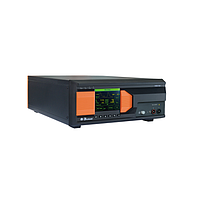
Within this category, 3ctest is represented by several models that illustrate different transient test needs. The 3ctest VSS 298 Spike Voltage Simulator is designed for spike simulation in the 50 V to 300 V range, with selectable pulse polarity and fast rise time characteristics suited to short-duration disturbance testing.
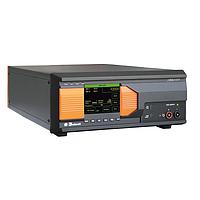
For users who need a wider spike voltage range, the 3ctest VSS 181 Spike voltage simulator extends up to 600 V and supports multiple source impedance options. This can be useful when the test method requires more flexibility in pulse shaping or when engineers need to compare device response under different simulated line conditions.
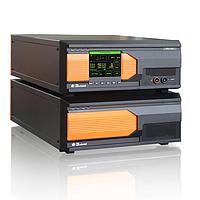
A more integrated example is the 3ctest VSS 1275 Spike Surge Voltage Simulator, which combines surge and spike waveform capability in one platform. It includes both surge and spike parameters, along with built-in DC power support for the equipment under test, making it relevant for labs that want to cover multiple transient scenarios without switching between separate instruments.
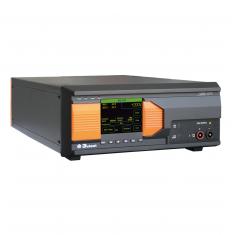
The 3ctest PFS 181 Vehicle-Mounted Power Failure Simulator addresses a related but distinct need: reproducing power dips, interruptions, and recovery behavior in vehicle-mounted electronics. While it is not a spike-only tool, it fits naturally into the same test ecosystem where engineers evaluate how electronic modules behave under several forms of power-line disturbance.
Understanding spike, surge, and power interruption behavior
A spike event is generally characterized by a very fast rise and short duration. It is useful for checking input protection components, transient suppression networks, and the robustness of sensitive electronic interfaces. Fast events can expose failure modes that may not appear during slower voltage variation tests.
A surge event usually carries more energy and longer duration than a narrow spike. This makes it more suitable for evaluating how power stages, converters, and protection designs behave when subjected to a larger transient stress. In real-world systems, both types of events may matter because equipment often encounters a combination of brief switching disturbances and broader supply anomalies.
Power interruption and dip simulation, as seen in the PFS 181, serves another purpose: verifying ride-through performance, restart behavior, and fault handling when the supply collapses or recovers. Together, these test approaches help build a more complete picture of power input resilience.
How to choose the right model for your application
If your work focuses mainly on fast pulse immunity, start by matching the required voltage level, rise time, and polarity modes to your test plan. A compact simulator with straightforward spike generation may be enough for routine validation. If your project involves multiple disturbance types, a combined platform may reduce setup time and simplify repeatability across test programs.
Current requirements of the equipment under test also matter. Some models in this category include built-in DC supply capability for powering the test object, which can be practical in automotive or embedded electronics environments. For applications that require a separate supply source or higher-voltage sourcing outside the transient test itself, users may also compare related bench equipment such as a high voltage DC power supply.
It is also worth considering workflow details such as touch-screen operation, trigger modes, repetition count, and over-current protection settings. These features influence day-to-day lab usability, especially when engineers need repeatable test sequences across many samples or product revisions.
Why this category matters in a power test lab
Transient simulation instruments fill a gap that standard power sources do not. A regulated supply is essential for stable input conditions, but it does not replace the need to inject fast disturbances, surge energy, or programmed power anomalies. In a serious validation workflow, both stable power delivery and controlled fault simulation are necessary.
That is why this category is best viewed as part of a wider power test ecosystem. Engineers may use conventional AC or DC sources for nominal operation, then switch to dedicated simulators to verify robustness against abnormal events. This structured approach supports more realistic product evaluation and can help identify design weaknesses earlier in development.
Final considerations
Choosing a spike or surge simulator is ultimately about aligning the instrument with the disturbance profile, power architecture, and repeatability requirements of your test process. A model intended for narrow spike injection may be ideal for one project, while another application may benefit more from combined surge and spike capability or from a simulator focused on vehicle power failure behavior.
This category brings together tools for engineers who need controlled, repeatable transient testing rather than basic power delivery alone. By comparing waveform type, voltage range, timing control, and support for the equipment under test, you can narrow down the most suitable solution for your lab or validation workflow.
Get exclusive volume discounts, bulk pricing updates, and new product alerts delivered directly to your inbox.
By subscribing, you agree to our Terms of Service and Privacy Policy.
Direct access to our certified experts