Bidirectional AC Power Supply
When development teams need to simulate the grid, absorb returned energy from the load, and switch flexibly between AC and DC operating modes, a conventional source is often not enough. Bidirectional AC Power Supply systems are designed for these more demanding test environments, where precise output control and regenerative capability can improve both test coverage and energy efficiency.
In laboratories, power electronics validation, motor drive testing, and renewable energy applications, this category supports scenarios where the equipment under test may both consume and feed back power. That makes bidirectional platforms especially relevant for engineers looking for controlled source-and-sink behavior rather than simple one-way power delivery.
Why bidirectional power matters in modern test setups
A bidirectional supply can do more than generate output voltage and current. It can also regenerate energy returned by the device under test, sending it back to the grid instead of dissipating it as heat. In many validation environments, this is useful for reducing wasted energy, limiting thermal load in the lab, and supporting more realistic operating profiles.
This capability is especially important when testing converters, inverters, motor drives, storage-related equipment, or any system that can operate in both sourcing and sinking states. Compared with a standard AC power supply, a bidirectional platform is better suited to dynamic test conditions where power flow is not strictly one direction.
Typical functions found in this category
Products in this category are intended for flexible electrical simulation rather than basic bench supply tasks. Based on the available models, the platform supports AC, DC, or AC+DC output modes, which helps engineers cover multiple test requirements with one system instead of separating AC source and DC source functions across different instruments.
Another notable characteristic is the wide operating range. The listed systems support AC output up to 450V L-N, DC output up to 636V, and frequency operation extending from DC to high-frequency AC conditions. For applications involving harmonics, phase adjustment, or transient behavior, this type of programmable source can be useful when evaluating how equipment responds beyond standard mains conditions.
Bripower solutions in this range
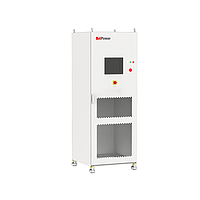
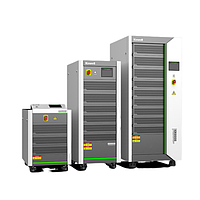
This category features solutions from Bripower, with representative models covering different power levels for scalable test requirements. For smaller or modular validation environments, the Bripower KGS 15 Bidirectional (Regenerative) AC Power Supply offers 15kVA output capability while still supporting AC, DC, and AC+DC operation.
For mid-range requirements, the Bripower KGS 45 Bidirectional (Regenerative) AC Power Supply extends the same concept to 45kVA. Where larger DUTs or higher-current scenarios are involved, the Bripower KGS 90 Bidirectional (Regenerative) AC Power Supply provides 90kVA capacity, with higher phase current and expanded system headroom for more demanding setups.
Key selection criteria for engineers and buyers
Choosing the right unit usually starts with the electrical behavior of the DUT. The first checkpoints are required power level, voltage range, current range, and whether testing needs AC only, DC only, or mixed AC+DC operation. If the application includes backfeed conditions, regenerative handling is a practical requirement rather than an optional feature.
Engineers should also review output frequency range, harmonic capability, phase angle control, and regulation performance. These factors matter when reproducing abnormal grid conditions, validating control behavior, or simulating non-ideal source conditions. If your project is focused more specifically on DC testing, it may also be useful to compare available options in high power DC supplies or high voltage DC power supplies.
Where bidirectional AC power supplies are commonly used
In practice, these systems are often considered for R&D, design verification, end-of-line validation, and power conversion testing. They are relevant wherever the source must not only deliver stable programmable power, but also handle returned energy safely and predictably. This can be important in sectors related to industrial drives, energy systems, advanced electronics, and grid-interactive equipment.
The available products also indicate support for functions such as harmonic generation, phase control, and simulated load behavior using RLC or RCD characteristics. That makes this category suitable for engineers who need to reproduce more realistic source conditions rather than simply applying a fixed waveform.
Integration, protection, and operating considerations
For B2B users, control and protection features are often as important as headline output ratings. The listed models include standard communication options such as LAN and RS485, helping them fit into automated test systems and remote-controlled validation benches. Protection functions including OVP, OCP, OPP, and OTP are also relevant in daily operation, especially when testing expensive or sensitive prototypes.
Cooling method, environmental operating range, and cabinet size should also be checked during project planning. Even when electrical capability is a match, installation space, airflow requirements, and utility input conditions can affect how well the system fits into an existing lab or production environment.
How to compare power levels within this category
The difference between 15kVA, 45kVA, and 90kVA is not only about maximum output. It also affects the kinds of DUTs you can test, the current margin available during transients, and the flexibility to support future projects without replacing the source too early. A smaller unit may be appropriate for component validation or lower-power assemblies, while higher-capacity systems are better aligned with larger converters, motor-related loads, or more aggressive dynamic profiles.
It is usually wise to size the supply with realistic headroom rather than matching only the nominal DUT rating. That approach helps maintain stable operation during startup events, transient demands, and test sequences that involve both sourcing and energy absorption.
Choosing the right platform for your application
If your workload involves programmable AC generation, optional DC operation, and returned-energy handling in one system, this category offers a practical starting point. The combination of bidirectional operation, wide voltage and frequency capability, and scalable power levels makes these products relevant for advanced electrical test environments rather than general-purpose supply tasks.
Review the required output mode, regeneration need, power level, and control interface before shortlisting a model. With the right match, a bidirectional AC power supply can simplify the test setup, improve realism, and support more efficient long-term operation across development and industrial validation workflows.
Get exclusive volume discounts, bulk pricing updates, and new product alerts delivered directly to your inbox.
By subscribing, you agree to our Terms of Service and Privacy Policy.
Direct access to our certified experts