Earthing wire
Reliable grounding starts with the right conductor. In power distribution, lightning protection, and temporary electrical safety work, the quality and suitability of the wire directly affect how fault current is dissipated and how safely a system can be brought to ground potential. Choosing the right earthing wire is therefore not just a material decision, but part of an overall grounding strategy.
This category brings together grounding conductors and related items used in earthing and temporary grounding applications. Whether you are sourcing wire for fixed grounding systems or looking for components used in portable grounding assemblies, the focus should be on conductor size, installation method, operating environment, and compatibility with the rest of the grounding setup.
Where earthing wire is used
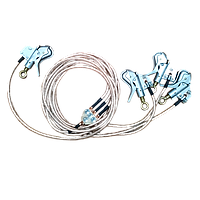
Earthing wire is used in a wide range of electrical and industrial environments. In permanent installations, it forms part of the path that connects equipment, structures, or grounding points to earth. In temporary maintenance work, it is often integrated into grounding hook sets and portable grounding assemblies to help protect personnel during switching or servicing tasks.
In lightning protection systems, earthing conductors also support the discharge path between the protection system and the ground network. When a project involves a broader grounding layout, the wire typically works together with items such as grounding rods and connection materials selected for the site conditions.
Key selection factors for earthing wire
The most important consideration is the conductor cross-section, because it influences current-carrying capability, mechanical robustness, and suitability for the intended duty. The context of use matters as well: a wire intended for portable grounding sets may prioritize flexibility and handling, while a conductor used in a fixed earthing network may be chosen with installation route and long-term durability in mind.
Buyers should also consider connection style, cable length, and how the wire interfaces with clamps, hooks, or other grounding hardware. In many industrial applications, a well-matched system is more important than any single component, especially where temporary grounding equipment must be deployed quickly and consistently by maintenance teams.
Examples of products in this category
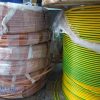
This category includes both standalone grounding conductors and wire assemblies used as part of a larger safety system. One example is the TCVN 3.0mm Grounding Wire, which represents the type of conductor product commonly selected where a dedicated grounding wire is required as part of an earthing setup.
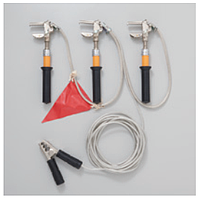
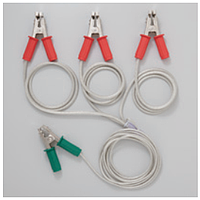
For temporary grounding applications, the wire is often integrated into complete sets rather than purchased as an isolated component. The HASEGAWA Type H Grounding Hook Set (6.6 kV) and HASEGAWA Type C Grounding Hook Set (6.6 kV) are useful references because they show how grounding wire works together with insulated sticks, clips, and portable storage arrangements in practical field use.
Portable grounding sets and the role of the wire
In maintenance work on medium-voltage systems, the conductor inside a grounding set has a clear safety function: it helps create a controlled path to ground after isolation procedures have been completed. In these cases, the wire is only one part of the assembly, but it is a critical one because it connects the live-work interface, grounding point, and associated hardware into a usable protective system.
Products from HASEGAWA, such as the Type C and Type H grounding hook sets listed in this category context, illustrate this system approach. Rather than treating the wire as a generic accessory, these assemblies highlight the importance of matching conductor size, lead length, fittings, and handling characteristics to the voltage class and maintenance procedure.
How earthing wire fits into a complete grounding system
An effective grounding system is built from more than one component. Earthing wire must connect reliably to electrodes, structures, busbars, clamps, and bonding points, and the quality of those interfaces has a direct impact on overall performance. This is why conductor selection is often considered alongside joining methods and site grounding design.
For projects that require permanent conductor connections, related materials such as heat welding molds and thermal welding agents may also be relevant. These products support durable conductor bonding in applications where secure electrical continuity is essential.
Choosing by application rather than by price alone
In B2B procurement, the right choice usually comes from matching the wire to the real operating requirement. A facility upgrade, a lightning protection installation, and a temporary grounding procedure may all need earthing conductors, but not in the same form. Length, flexibility, connection hardware, transport needs, and installation environment all influence what should be selected.
It is also useful to distinguish between wire sold as a standalone grounding material and wire supplied within a complete grounding set. If your team needs a ready-to-use temporary grounding solution, a hook set may be the better fit. If the requirement is for conductor material within a broader earthing network, then a dedicated grounding wire product may be more appropriate.
What buyers should review before ordering
Before purchasing, confirm the intended application, installation method, and compatibility with the rest of the grounding system. Check whether the requirement involves portable use, fixed installation, or integration with existing grounding points. This helps narrow the selection and reduces the risk of choosing a wire that is correct in size but unsuitable in handling or connection format.
It is also worth reviewing whether the project may require adjacent grounding products beyond the conductor itself. In some installations, the wire is only one element of a complete earth network that may also include rods, connection materials, and other lightning protection components. Taking this broader view usually leads to a more reliable and maintainable solution.
When selected with the full application in mind, earthing wire supports both electrical safety and long-term grounding performance. From standalone conductors to wire assemblies used in portable grounding sets, this category helps buyers compare suitable options for real industrial use and build a grounding solution that fits the job with greater confidence.
Get exclusive volume discounts, bulk pricing updates, and new product alerts delivered directly to your inbox.
By subscribing, you agree to our Terms of Service and Privacy Policy.
Direct access to our certified experts